

Real Estate Market Intelligence July 2026

Real Estate Market Intelligence
July 2026
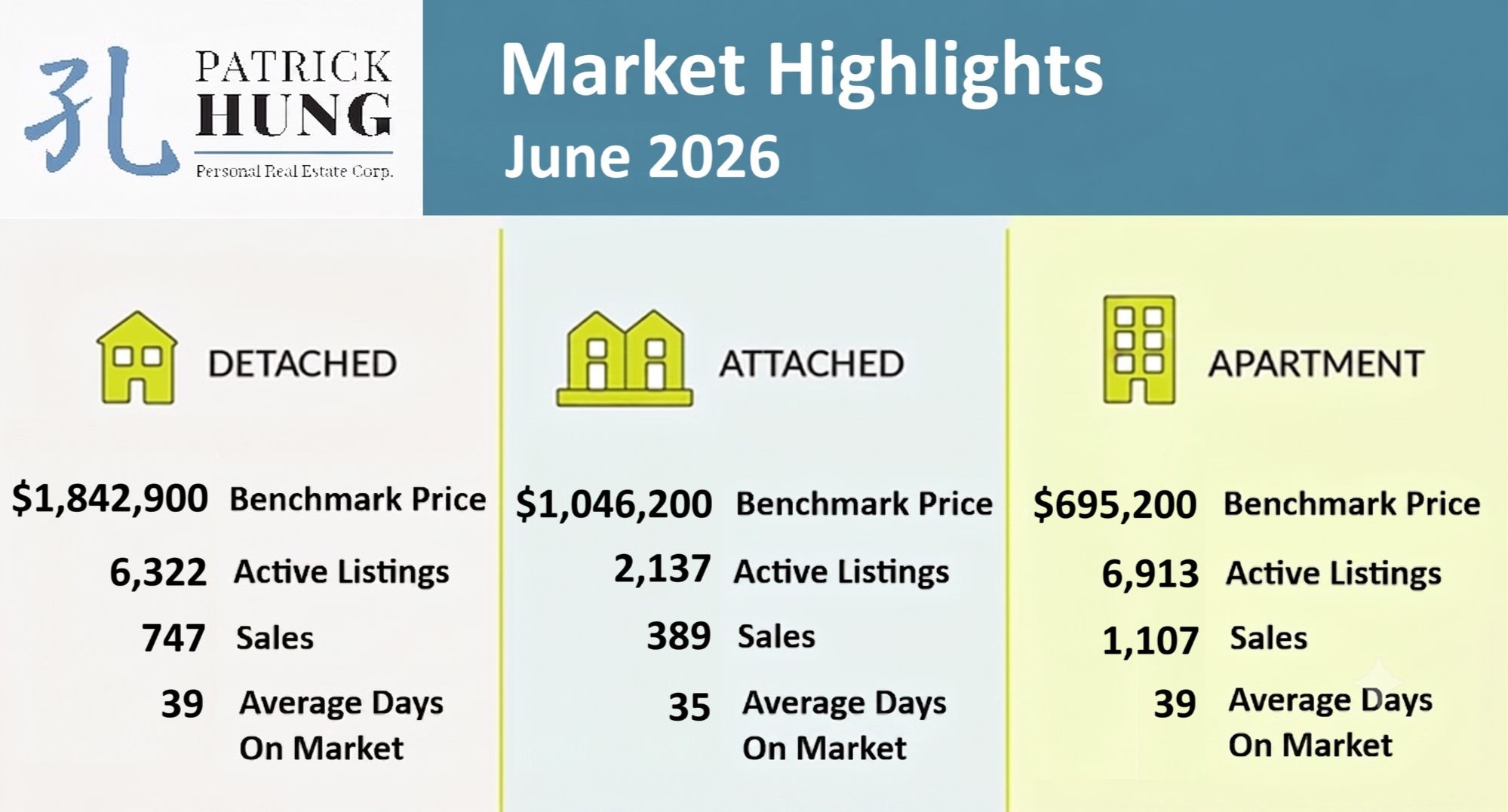
Summer is in full swing and World cup is near the end. Vancouver had a good run being a World Cup host city, and there comes a time when things return to normal. As for the first 6 months of Vancouver real estate, it has anything BUT normal. In short, many predicted that 2026 would be a year of real estate recovery, and boy weren't we surprised. 2025 had multiple decade low sales; 2026 so far is not any better. However, in a typically slower time in sales for June when most Canadian families are getting ready for summer, we saw a pleasant upswing: sales shot up nearly 10% year-over-year. So far into 20206, the Vancouver real estate was another season of "hot season not hot, and cold season not cold." This is almost as unpredictable as the war in Iran. Lots to cover this month as we see the Canadian unemployment rate dropped to 6.5% in June, albeit this is made up of mainly part time jobs hired for the summer. Another major headline was Mark Carney's government $1.45 billion bailout plan for Vancouver developers to buy 2,200 unsold pre-sale units as rentals. Last but not least, the major bank's fixed mortgage rates (mirroring bond rates) is having a roller coaster ride, which came down two weeks ago as the Iran war truce was in place, and now has shot up again due to the reignited war. Let's dive deeper.
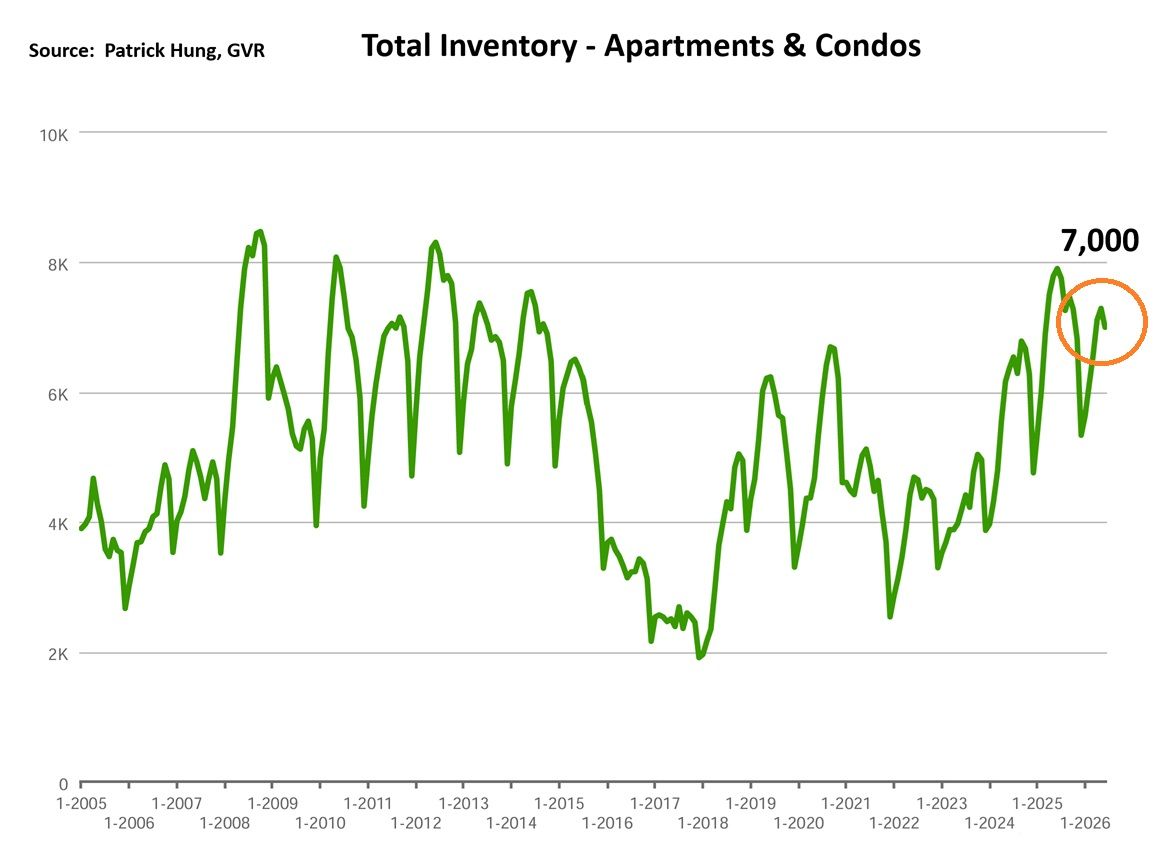
June's monthly real estate sale of 2,380 units were nearly 10% for the same month year-over-year. We have been monitoring the market closely and already saw in mid-June that the sales were picking up steam, and that momentum carried thorough the entire month. Having said that, I must emphasize that one month does not make a trend. On a macro level, June's sales (demand) was still -12.4% below the 10 year average, and total inventory (supply) is +30.2% above the 10 year average. The spread between the two is 42.6%, which is faring much better than 7 months ago, which at one point it hit 70%. The Greater Vancouver average price remain flat in June at -0.1%, but again this is highly segmented. Single house and townhouse price having been chopping sideways for the past 3 months, whereas apartment prices continue to drop further due to the healthy supply coming onto the market. Anecdotally, there are definitely more traffic at open houses and showing requests, but this again is almost reserved for home that meet the following criteria of 1.) good location 2.) fairly priced and 3.) ideal product that does not require extensive renovation. When a home meets all three, then it will attract an offer within two weeks. Key is, is that offer a qualified one? We are still seeing some "weak" offers, one that have subject to sales. Collapsed offers (offers that agreed to terms already) is also common. The current market still feels like there's only 1 out of 10 of good listing out there. As Buyers remain selective, there will now be less and less inventory to choose from due to seasonality. The only segment that has an abundant supply is is condos, where similar floor plans are plentiful, so it's just going to come down to the price.
On the economic front, Mark Carney has been busy blowing up the headlines, two of which came to mind: the new pipeline with Alberta that will be 90% financially-backed by the federal government, and a $1.45 billion "bailout" plan by purchasing 2,200 pre-sale condo units for "below the market price" from Vancouver developers, and turn them into rental housing. Let's dissect the latter in detail:
1. Privatize the gains, and socialize the losses. This is the point where the federal government acknowledges the Vancouver (and Toronto) pre-sale condo game is broken, and hence is providing a reset button at the cost of ALL Canadian taxpayer dollars. Certainly not fair for those taxpayers in Alberta, Nova Scotia, and anywhere in between to have their hard-earned tax dollar just to save the Vancouver market.
2. Why save the Vancouver? Two things came to mind. Mark Carney had major Vancouver developer backing during this election campaign: it is now a time to return the favor. Also, the current housing minister of Canada, Gregory Robertson, is the former major of City of Vancouver. Coincidence? Or is it all too familiar?
3. Who is this bailout really benefiting? The government says it will help the Vancouver rental housing market. Some also say it benefits the developers, but when digging deeper, it is actually saving the major banks. Why? Major banks are behind the lending for BOTH the developers and the pre-sale buyers. So if the developers default (which are on the rise), more bad debts gets racked up, and less "future" projects get done because of the loss in both development business and buyer confidence.
4. The bailout of 2,200 units are approx a third of the unsold inventory in Vancouver. Details have yet to be confirmed, but it is said that the federal government will be purchasing this "below cost". Again, we need more clarity to see how this will play out. However, I might expect such cost sheet to never see the light of day.
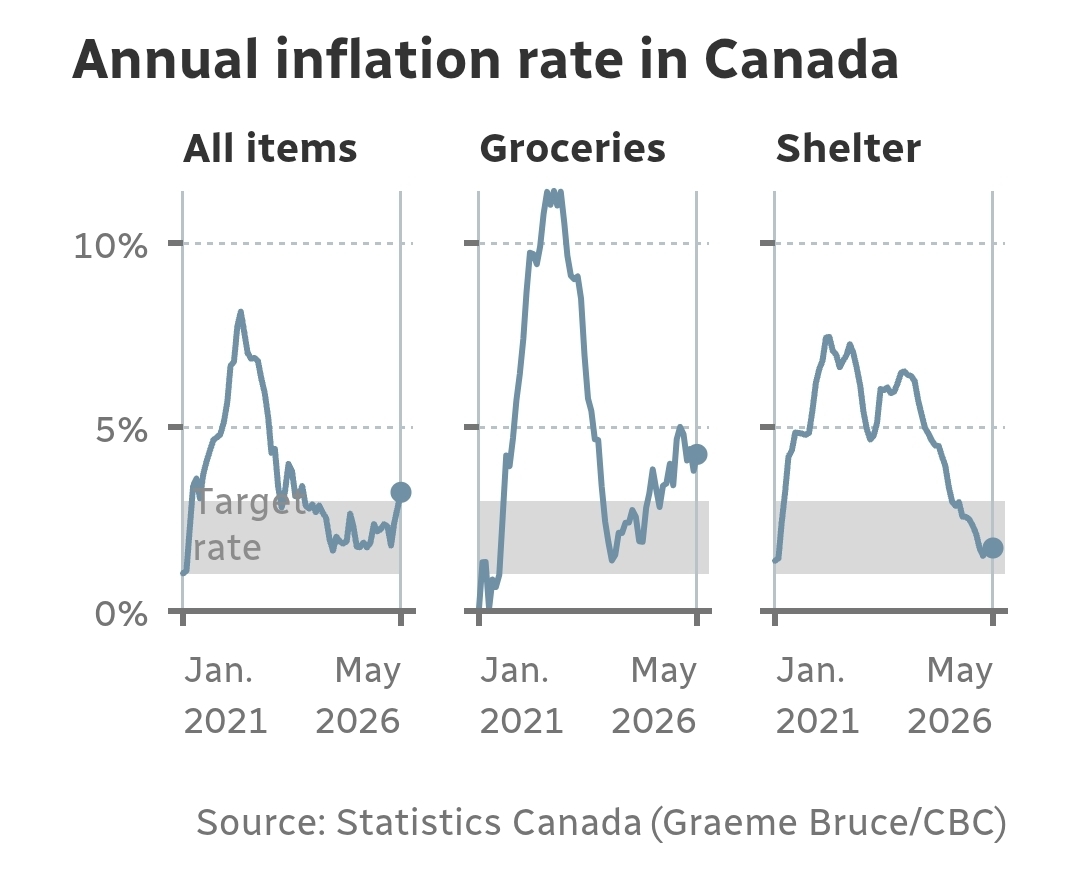
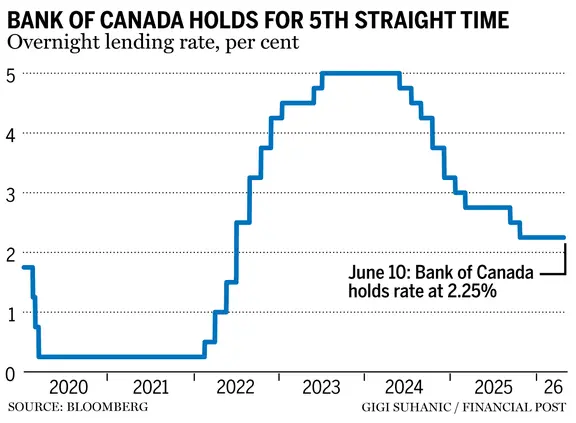
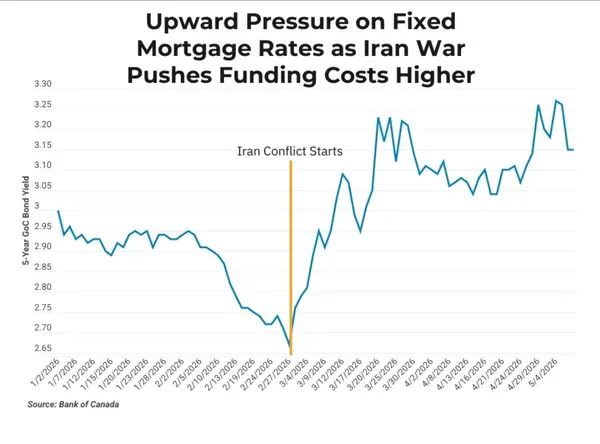
On the global stage, the reignited war in Iran has caused further volatility in the bond markets, which trickles in the Canadian fixed mortgage rates. From the roller coaster ride of rising fixed rates back in March-May, to falling rates in late June, and now back to rising rates again. This has proven a headache to some Buyers whom have locked in their pre-approval rates for 90-120 days. Those who have locked in their rate are more inclined to purchase a property within the time frame, and maybe that's one of the reasons that contribute to the increased real estate sales in Vancouver in June. Having said that, with the on-again war in Iran, global inflation is bound to shoot up, with GDP go down the other way. As widely expected, the recent Bank of Canada held the rates at 2.25%, but given how Canadian food and energy inflation will likely run hotter than expected, it would make the Bank of Canada's future decision even harder, as a rate hike is very likely. And if the rates do shoot up, just how will the Vancouver real estate react? We will have at least a few months before any major move though. Meanwhile, enjoy the summer.
Some of the unique trends I've been observing:
1. The CUSMA (Canadian-US-Mexico Agreement) renewal date on July 1st have come and gone. Nothing was renewed, now now it will be renegotiated on a yearly basis. Even though this has not created an immediate impact on the Canadian economy, it will certainly stir up emotions in the Canadian manufacturing industry, many of which are already on the edge of moving their plants south to the US. In short, Ontario will have a huge impact as the auto manufacturing industry may prove to be a permanent damage rather than a temporarily one.
2. On the other side of the coast, both Alberta and BC will benefit from the new pipeline news that was spearheaded by the Carney government. Disclaimer: I am pro-pipeline and believes that Canada need to export gas to make its economy stronger. As much as I disagree with some of Carney's government policies, I applaud this as a right move from him. What makes it more interesting is the government backing funding of 90% of the project, which allows it to bypass any private sectors' hurdles. If done right, this new pipeline could be Carey's legacy in making Canada's economy stronger and less dependent on the US for decades to come.
3. What was usually a dull end of spring month of June in Vancouver real estate, has turned out to be a rather was a pleasant surprise. Sales for June shot up nearly +10% year-over-year, and it was broad based with all segments sales trending upwards. Anecdotally, the single house pent-up demand certainly being released and will have the fastest recovery, with entry level homes in North Vancouver, Coquitlam and Langley having sales ratio (% of homes sold) of 23%, 18% and 18% respectively. This puts such areas in or close to Seller's market. When prices in some areas are dialing back to 2021 levels, the buyers know that it's an opportunity: just a matter of who makes that move.
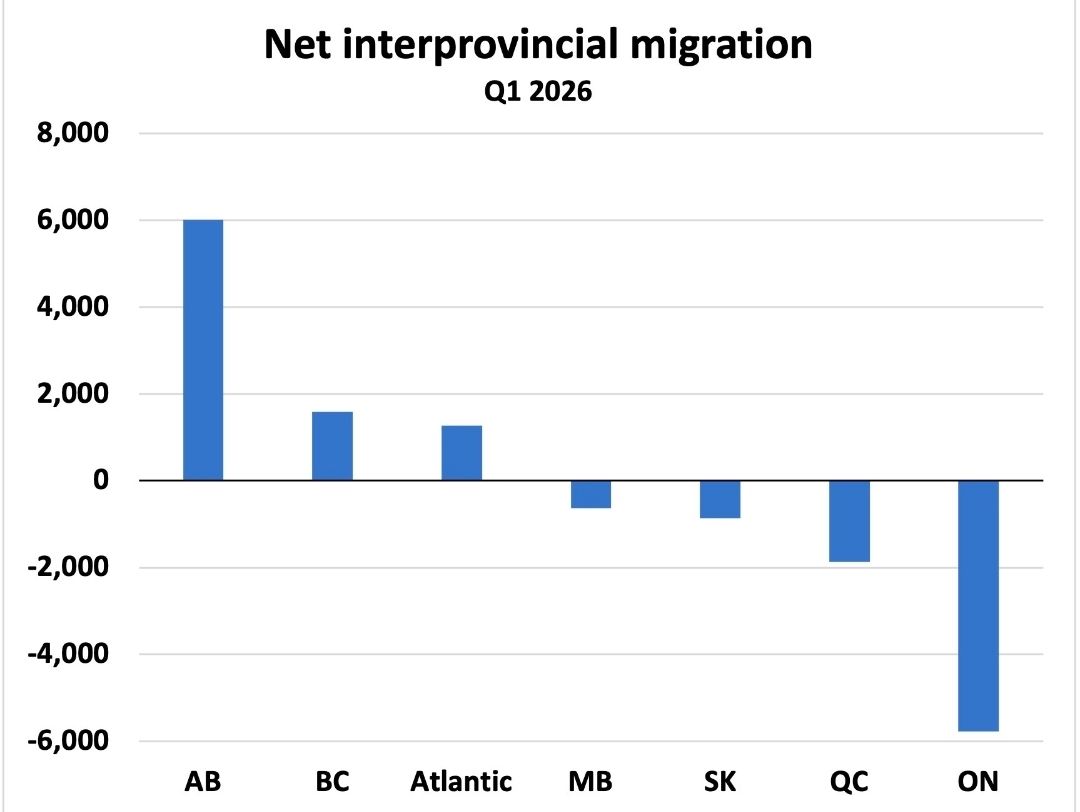
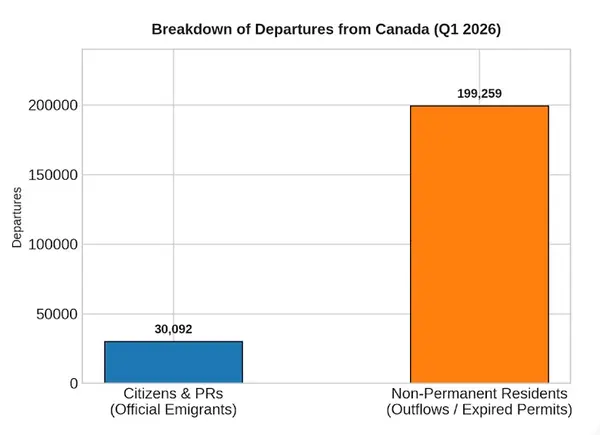
4. Inter-provincial immigration for Q1 of 2026 is now taking shape, with having nearly 6,000 people leaving Ontario and nearly 1,900 leaving Quebec. Meanwhile, the migration to the West is evident, with Alberta BC attracting 6,000 new residents and BC at 1,800.
5. Fixed mortgage rates is in for roller coaster ride in the past 8 weeks, thanks to the on-again off-again war in Iran. In May, major banks have quietly jacked up their fixed rates by between +0.3% to +0.4%. And then a truce was signed, and fixed rates started to come down a bit by -0.2%. Now the war has been reignited, and rates are on the rise again. Interestingly, most now seem to have gotten used to the heightened volatility as the new norm.
Here are the 3 highlights for June:
- Total inventory of 17,017 units is the sixth highest June's total inventory in the past 21 years. Signs of softening inventory continues, and last month it was broad based and mainly due to the seasonality. Typically, we will see the highest number of inventory listed throughout the entire year in May & June. For those Buyers who are still waiting, there will be less and less to choose from for the remaining of the year.
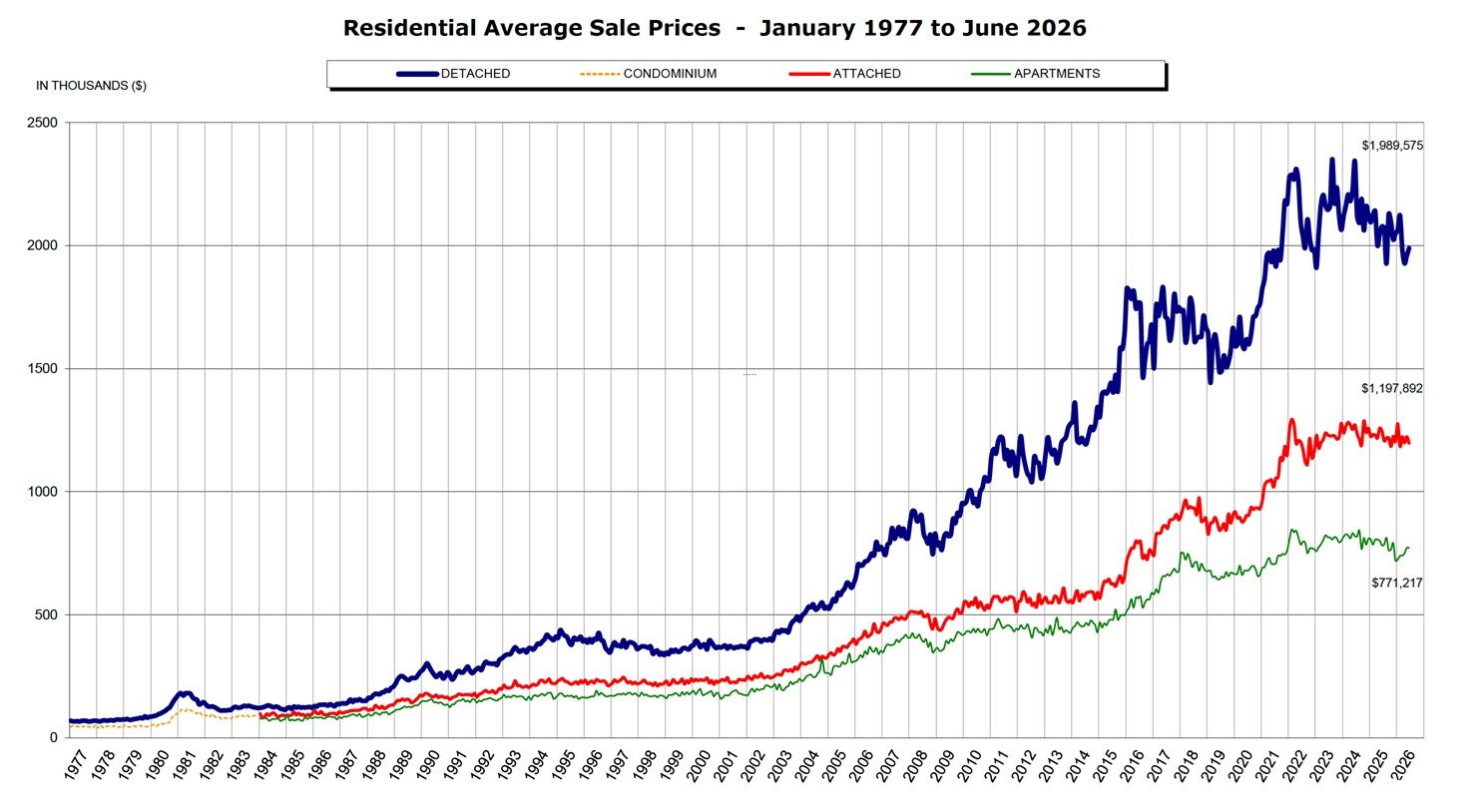
- Prices have been chopping sideways in the past few months, with a price change at -0.1% last month, to -0.7% in the last 3 months, to -1.5% in the last 6 months, and to -6.2% in the last 12 months. In other words, the sharpest drop was from June 2025 to December 2025 (-4.7%), while January 2026 to June 2026 shifted only a little (-1.5%). Could this mean the Vancouver real estate market prices are starting to bottom in 2026? Even when the price do flatten, it may be a long road toward any type of price recovery.
- As far as the stats show that the June sales increase was broad based, the single houses and townhouses (especially the larger ones) are still in much higher demand than apartments. As most buyers see prices are dialing back to 2021 levels, they are also aware this is one of the best time to upsize since the early pandemic days. On the contrary, sellers who bought during in the last 5 years are now seeing the red with 10%+ loss.
Here are the in-depth statistics of the June:
- Last month's sales were -12.4% below the 10 year June's sales average (compared to -26.6% in May). Demand returned a little after a long-battered market.
- Month by month residential home sales jumped +10.3% from May, which was a pleasant surprise.
- Month by month new home listings dropped by -3.4%. Typically, we will have less and less listings now till the end of the year.
- Last month's price was nearly flat at -0.1% (compared to 0% in May)
- Sales-to-listing (or % of homes sold) ratio remained relatively flat as well at 14.6% (compared to 13.1% in May). By property type, the ratio is 12% for single houses, 17.8% for townhouses, and 15.5% for condos.
Download Vancouver Real Estate Report June 2026
Single House Market
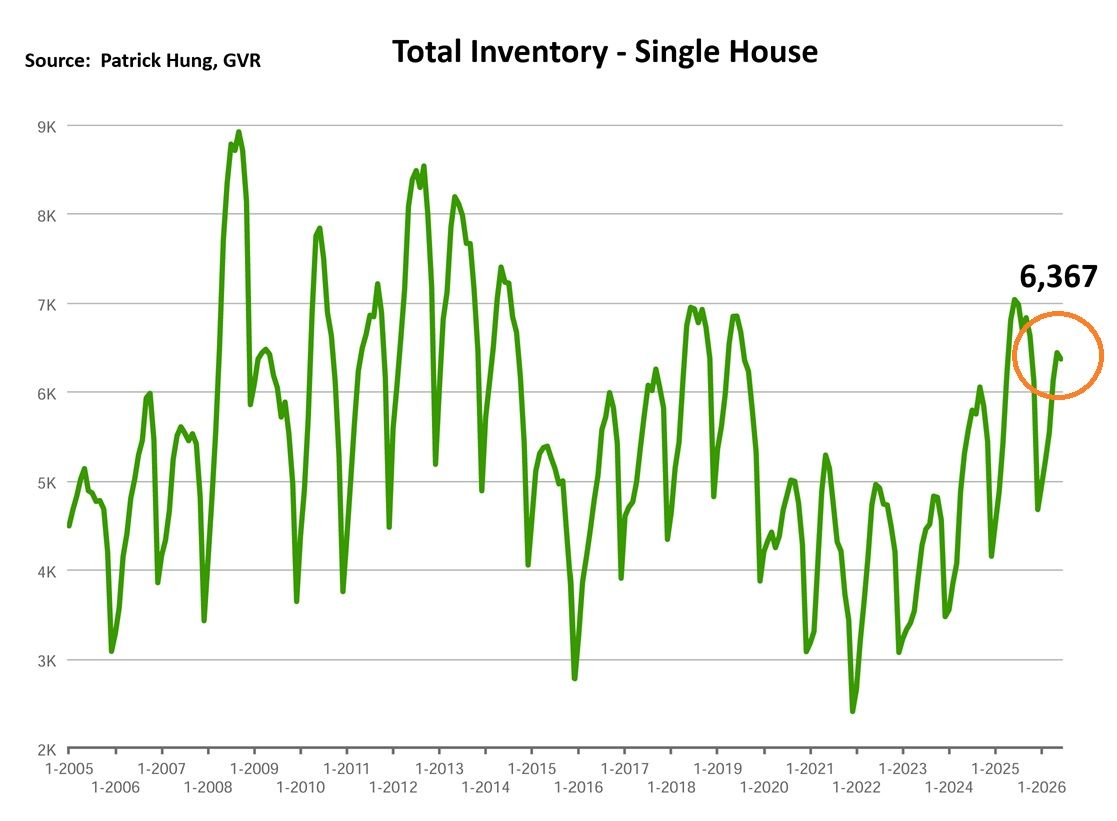
Single house market continue to show signs of recovery in terms of sales but not in price. As price has always been a lagging indicator of sales, it will take a few months to bring the inventory back to normal levels before any price recovery. Having said that, we are starting to see more offers coming early than before, especially in entry level homes. Only 3 months ago, entry level priced single house had to sit for weeks before getting an offer. However, now we are starting to see offers on similar home on the first week (even though they may not materialize), and compound that with less inventory, some buyers who've been shopping for a while now are starting to realize that what they once saw was good listing is now sold. With regret, some of these buyers pick up the pace, while others who can and will wait. I've been long reporting on the supply side (and especially single house) because for the past decade, we are seeing less and less new single house being built, yet it remains to be the most desired property type. Most Canadian young families (especially those with kids) will tell you they want to own a single house with an ideal front and back yard where they see their kids play sports. But the prices have ballooned so dramatically since the pandemic that such Buyers are left with no choice but to turn to a townhouse instead. However, now that the single house prices are dialing back to 2021 levels, this may present to be an ideal opportunity.
Again, the single house market is hyper local. From the top down, we see the most affluent area like the Vancouver Westside (average home price $3.04m) with pockets of neighborhoods like Mount Pleasant, Kerrisdale, Kitsilano, and McKensize Heights having sales-to-listing ratio (% of homes sold) at 33%, 23%, 20%, 19% respective, which put them in the Sellers market. However, as a whole, Vancouver Westside remained in a Buyers market at 11%. North Vancouver remain the hot area, with sales-to-listing ratio at 23%, which has been consistently in a Sellers market. Other neighborhoods such as Ladner, East Vancouver, Burnaby, and Richmond are all stuck in between at balance market, with sales-to-listing ratio at 16, 15%, 12% and 12% respectively. In the Fraser Valley, Langley looks the most promising at 18%, while Surrey the least at 9%. I wouldn't be surprised to see North Vancouver and Langley's single house price recover much sooner than others. If you're a buyer in these two areas, make sure to pivot accordingly.
For the month or June, the neighborhoods that registered the most price growth were Bowen Island, Burnaby East and Sunshine Coast posting +1.5%, +1.3% and +1.2% respectively. Conversely, the neighborhoods registered the most significant price drops were Squamish, Whistler and Pitt Meadows with -2.9%, -2.4% and -2.2% respectively. The single house market is border lining between a Buyer to Balance market, with average days on market increasing slightly to 39 days (compared to 38 days in May), and month-to-month sales price was nearly flat at -0.3% (compared to +0.1% in May). Sales-to-listing ratio (% of homes sold) improved to 12% (compared to 10.7% in May).
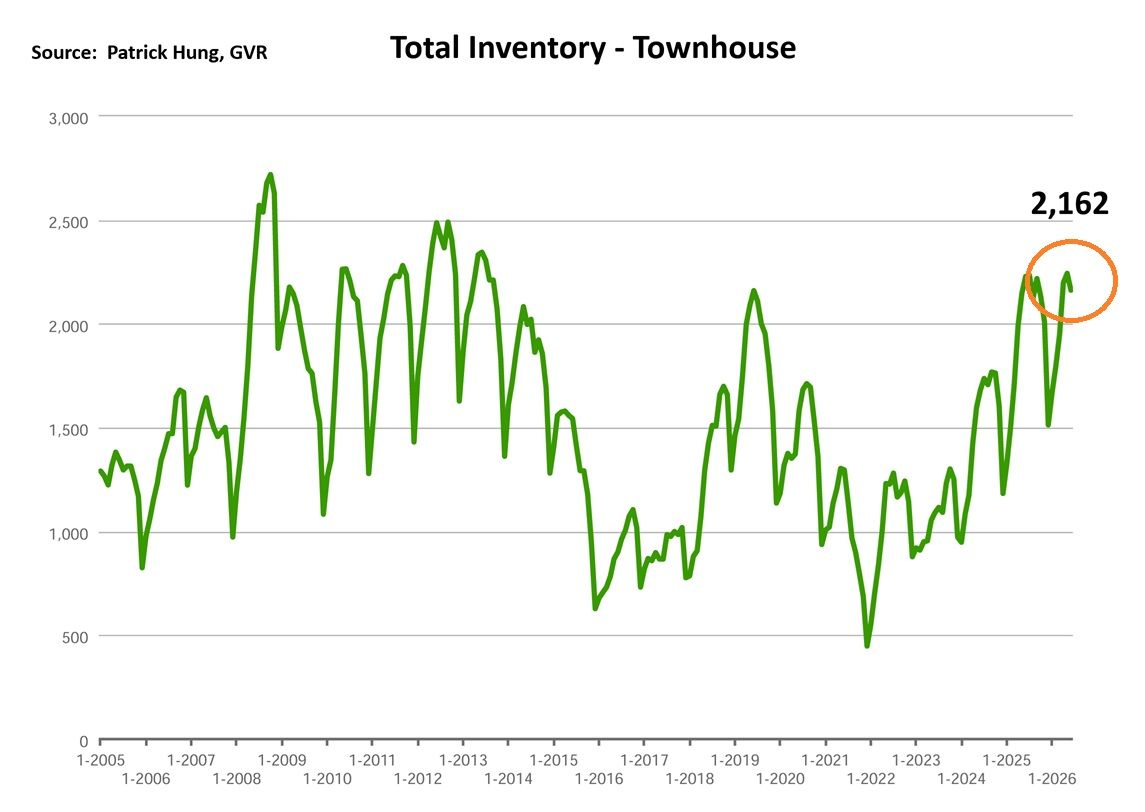
In terms of price, the townhouse market had the least monthly price drop across all segments at -0.2%, albeit the difference was very little (apartment at -0.4% and single house at -0.3%). Townhouse sales-to-listing ratio (% of home sold) is also the best across all segments at 17.8%, which is near a Seller's market. Townhouse and multi-plexes (4,6,8 unit homes) prices have come down to a point where most up-sizers are comfortable with. For example, a brand new townhouse in Langley with 3 bed 3 bath around 1,400 sf are listed as low as $830k. This price point is where Buyers will benefit most from the government programs, such as the exemption of first time home buyer property transfer tax (approx 2%), and also the exemption on the GST (5%) on a brand new home. This nearly 7% savings on a $860k townhouse would amount to approx $60k, which is significant enough to have them come off the sidelines. For this reason, we are seeing younger Canadian families moving out to Langley and Surrey townhouses. On the other hand, a townhouse first time home buyer in Metro Vancouver would not have such luxury, with average median prices of a RESALE townhouse (not brand new) at $1,046,200. However, the program does benefit some new townhouse and multi-plex buyers in the form of saving the GST under prices of $1.5m, which is quite an incentive. As for the re-sale townhouse market, activities have evidently increased and especially those larger townhouses (1,600+ sf) that's competitively priced. Since these products are more rare and have sizes and bedrooms similar to a single house, they cater to Buyers who cannot afford a house (approx $400-$500k difference in some areas) but wants similar space. Meanwhile, smaller townhouses (less than 1,200 sf) homes are selling much slower, just like the smaller sized condos (less than 500 sf). As the market caters to mainly end-users and not investors, these smaller homes that was built for investments or smaller families are the hardest to move for sellers and developers.
In June, the areas with the most townhouse price growths were Burnaby East, Tsawwassen, and Vancouver West, registering +2.2%, +2%, and +1.5% respectively. On the other hand, the neighborhoods with the most significant price drops were North Vancouver, Burnaby South, Burnaby North at -1.9% (tied for 1st and 2nd) and -1.2% respectively. The townhouse market is border lining a balanced and a seller's market, with days on market nearly flat at 35 days (compared to 34 days in May). Month-to-month sale price slipped slightly by -0.2% (compared to +0.2% in May). Sales-to-listing ratio (% of homes sold) shot up to 17.8% (compared to 15.4% in May).
Condo Market
For the past 3 months (which is usually the busiest time for real estate in Spring), the condo sales had been underwhelming, with sales being flat from March to May. One of the bright spots was that June's condo sales had liven up, which saw an increase of +8.5% month over month. It was as though the apartment Buyers had been holding off, and for whatever reason , the pent up demand was released at least in June. Despite that, the market remain polarized. First time home buyers for apartments remain the highest selective buyers, as they seem to have much better control of their time. For example, if a married couple is having another child on the way, their urgency to buy and move is greater than that of a single professional who's renting and their purchasing timeline is highly flexible. Having said that, the micro-homes (sub 500 sf) sales are still abysmal, as nearly no buyer fancies in living in one. On the other hand, some larger condos (much like the larger townhouses) that are competitively priced are gaining traction. This shows a broad based willingness of Buyers looking to upsize, not just in condos but across all segments. As the price gap to upsize shrinks to a reasonable level, and if the Buyers' financial conditions allow (i.e didn't get laid off), then such upgrade has become almost natural. But the primary condition hinges whether these upsizing Buyers would need to sell. When a Buyer has wrapped up buying and turned into a seller, then the selling motivation becomes stronger as well. For this reason, I believe the prices of the condos will drift even lower, and for longer. Speaking of prices, the condo market last month posted a -0.4% loss. Didn't seem a lot, right? Diving deeper, that price change was skewed in June in having all the biggest market gains in the seasonal outskirt areas (Whistler, Sunshine Coast and Squamish), with each posting monthly gains of over +8%. When we strip out those areas, the Greater Vancouver condo prices actually dropped -1% month-over-month, which was not a minor change.
For the month of June, the best performing neighbourhoods for condos were in Whistler, Sunshine Coast and Squamish, gaining +8.7% and +8.3% and +7.7% respectively. Conversely, the areas with the most significant price drops were in Burnaby East, Richmond, and Burnaby North, posting -2%, -1.7% and -1.5% respectively. The condo segment remained in a balanced market, with average days on market nearly flat at 39 days (compared to 38 days in May). Month-to-month sale price continue to slip by -0.4% (compared to -0.7% in May). Sale-to-listing (% homes sold) ratio remained increased slightly to 15.5% (compared to 14.2% in May).
Here are the Three Trends I'm Observing:
1. Privatize the Profits, Socialize the Losses
Mark Carney's bombshell headline of using $1.45 billion to purchase 2,200 pre-sale condos in Vancouver and turn them into rental house was definitely a hotly debated topic. Regardless of the political motivation or business favors for Vancouver developers, I'm looking at it from a purely cost-effective perspective. One of the fine prints in the deal was that government will buy the pre-sale condos "below the cost of construction." So the billion dollar question is, how much is "below", and where will these homes be allocated? Are we talking about premium Westbank's pre-sale condos, which were selling at a $2,500 per square feet? One can only imagine it would NOT be efficient to turn these highly inflated, premium-cost construction into "rental housing". It mind-blowing to see Carney's government policy intervenes the free market and save the Vancouver developers. This reminds me of a classic investment playbook phrase: "Privatize the Profit, Socialize the Losses". (Source: Andy Yan, SFU City Program, Urban Studies)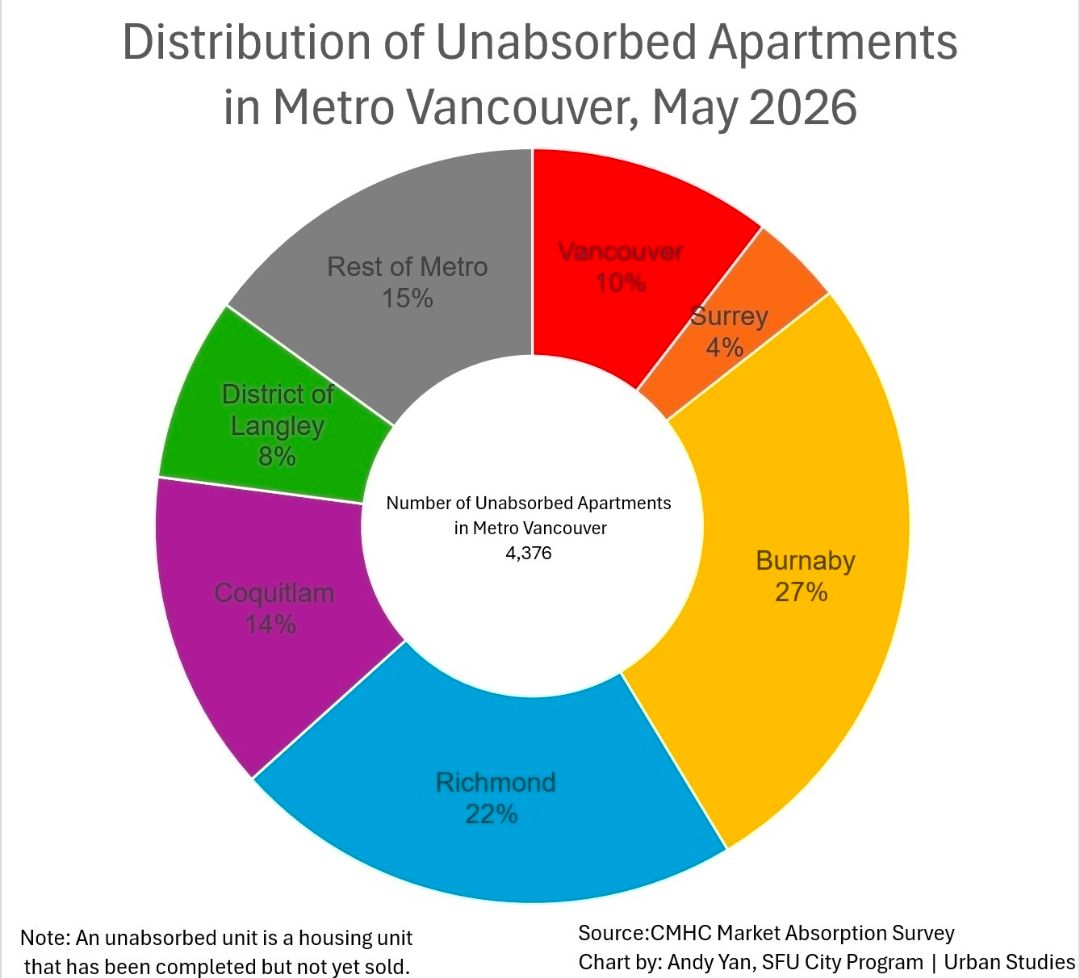
2. Go West
With over a year of tariff and disagreement with the US, the Canadian economic outlooks has took a drastic turn. Manufacturing in Ontario, such as the auto industry, may be changed forever. Auto plants will shut down and move to the US, and the noise will hoover around Chinese EV companies coming over to to open up "new" plants. With less job and business opportunities, it's not hard to see why many residents are leaving Ontario and Quebec and heading West, mainly to seek greener pasture in Alberta and BC. (Source: Statistic Canada)
|
3. Shelter In Place
|
Recent Posts


GET MORE INFORMATION