

Real Estate Market Intelligence May 2026

Real Estate Market Intelligence
May 2026
|
Single House Market
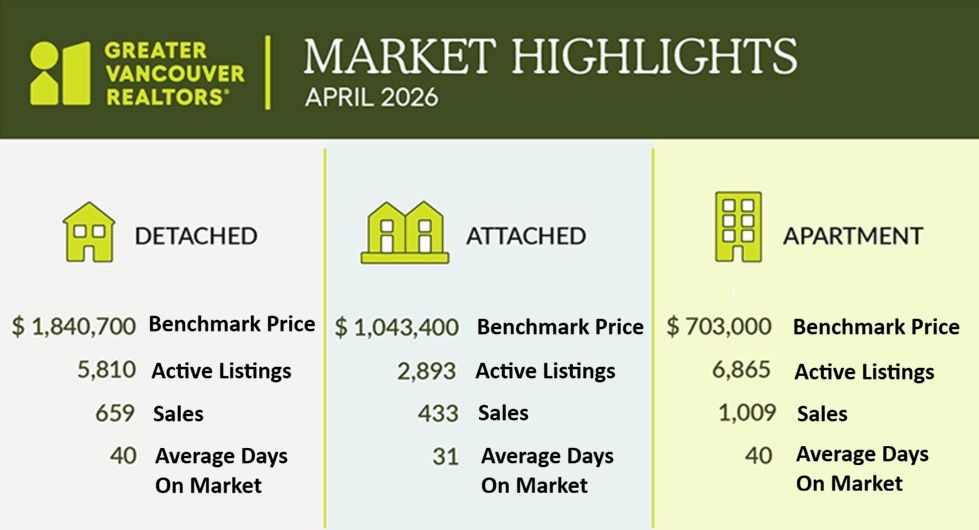
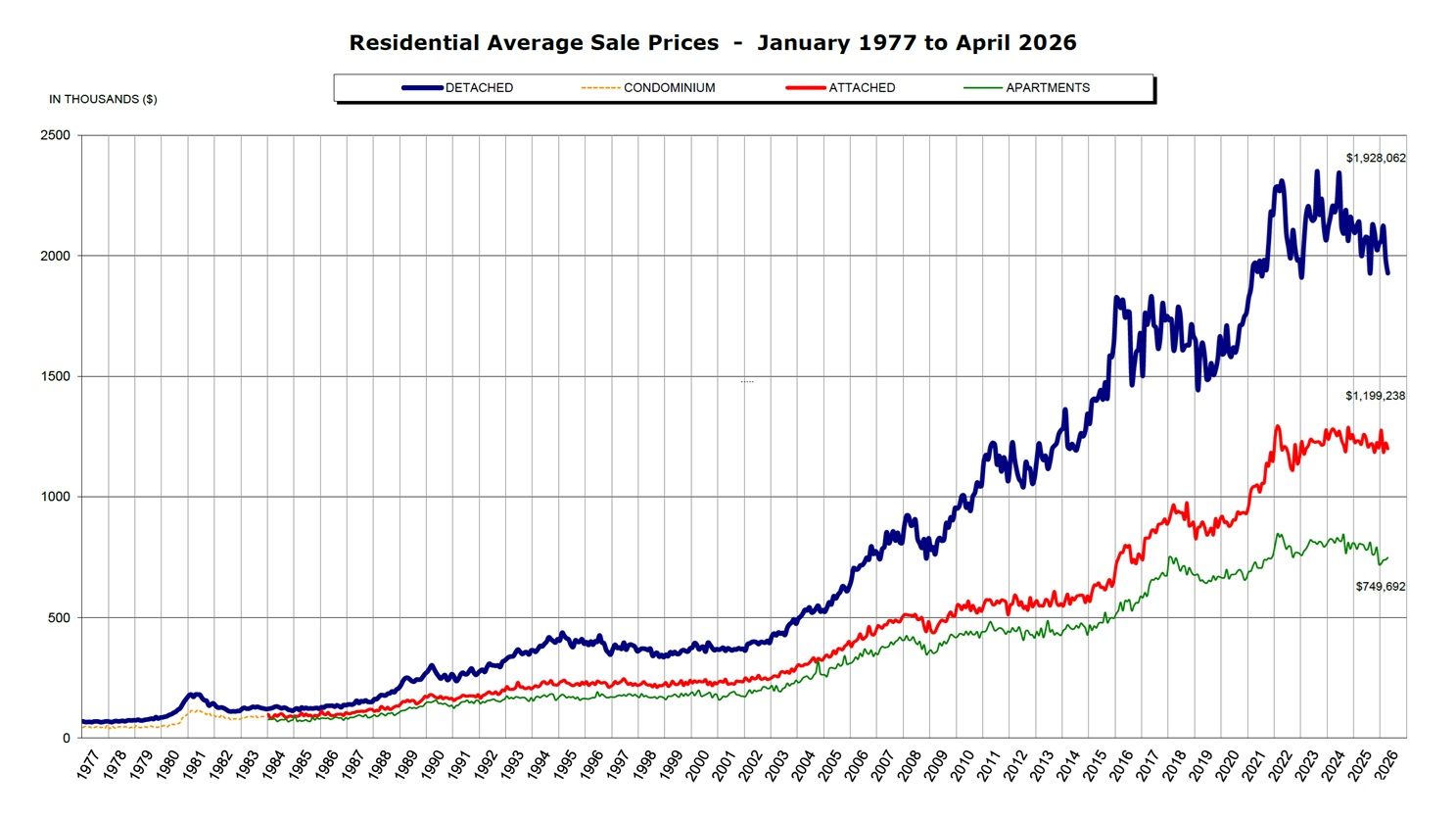
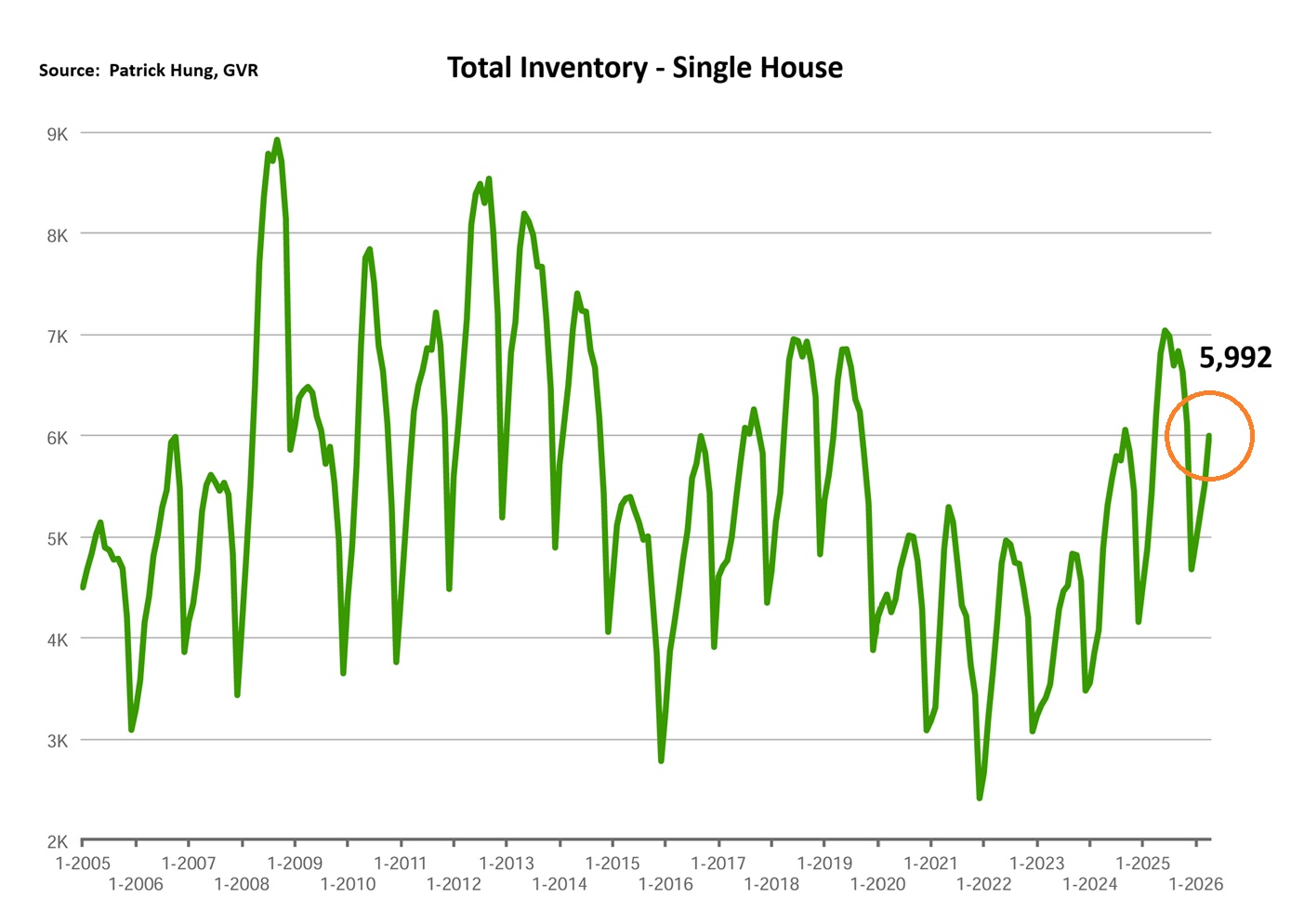
Spring seems to have waken up the single house market out of the long hibernation. In April, the spotlight was shining on the single houses, and for the first time in a while, it was in a good way. What we saw is demand shot up slightly while single house inventory started to soften. While this may be welcoming news for Sellers, some Buyers remain optimistically cautious. Most neighborhoods have shifted from a Buyers market to a Balanced market in April, and it was widespread, from East Vancouver to Burnaby, Richmond, New Westminster, to Port Moody. In other words, this has reduced the overall single house inventory, which was a combination of increase sales, and with more sold and expired listings (unhappy Sellers taking their home off the market altogether). Keep in mind that real estate is hyper-local, and while many neighborhoods saw an uptick in sales, others remain stagnant in a Buyer's market, such as West Vancouver, Vancouver Westside, North Delta, White Rock, Surrey, and Coquitlam. Most entry level houses are getting increased traffic, and some sharply priced, good conditioned home in a desirable neigborhood were surprisingly getting multiple offers. Again, these were outliers but it could be a sign that the Buyers are finally coming out of the woodwork after sitting on the sidelines for so long. I am getting the feeling that with single house inventory leveling, prices will still have more room to go down, but not that much more. It usually takes the demand and supply to stabilize first, and then prices leveling follows. Historic tells us that entry level homes (i.e $1.5m to $1.6m) will always get snatched up first, so for the Buyers with a very limited budget and wishes to wait any longer, I would recommend to really step up now. Whenever a market turns, it doesn't take long (even though it feels like it goes), but Buyers can get squeezed out of their budget quickly. As for single house Sellers, I would recommend to continue pricing their home sharply, or else they may not be able to ride this wave. Then again, there are always deep-pocketed, lowly-motivated Sellers out there "just trying" the market.
For the month or April, the neighborhoods that registered the most price growth were Vancouver West, Tsawwassen, and North Vancouver, posting +1.9%, +0.9% and +0.7% respectively. Conversely, the neighborhoods registered the most significant price drops were West Vancouver, Sunshine Coast and Bowen Island, with -7.2%, -3.2% and -2.8% respectively. The single house market shifted from a Buyers market to a Balanced market, with average days on market improving slightly to 40 days (compared to 46 days in March), and month-to-month sales price dropped by -0.8% (compared to +1.1% in March). Sales-to-listing ratio (% of homes sold) remain nearly flat at 11.3% (compared to 11% in March).
|
Condo Market
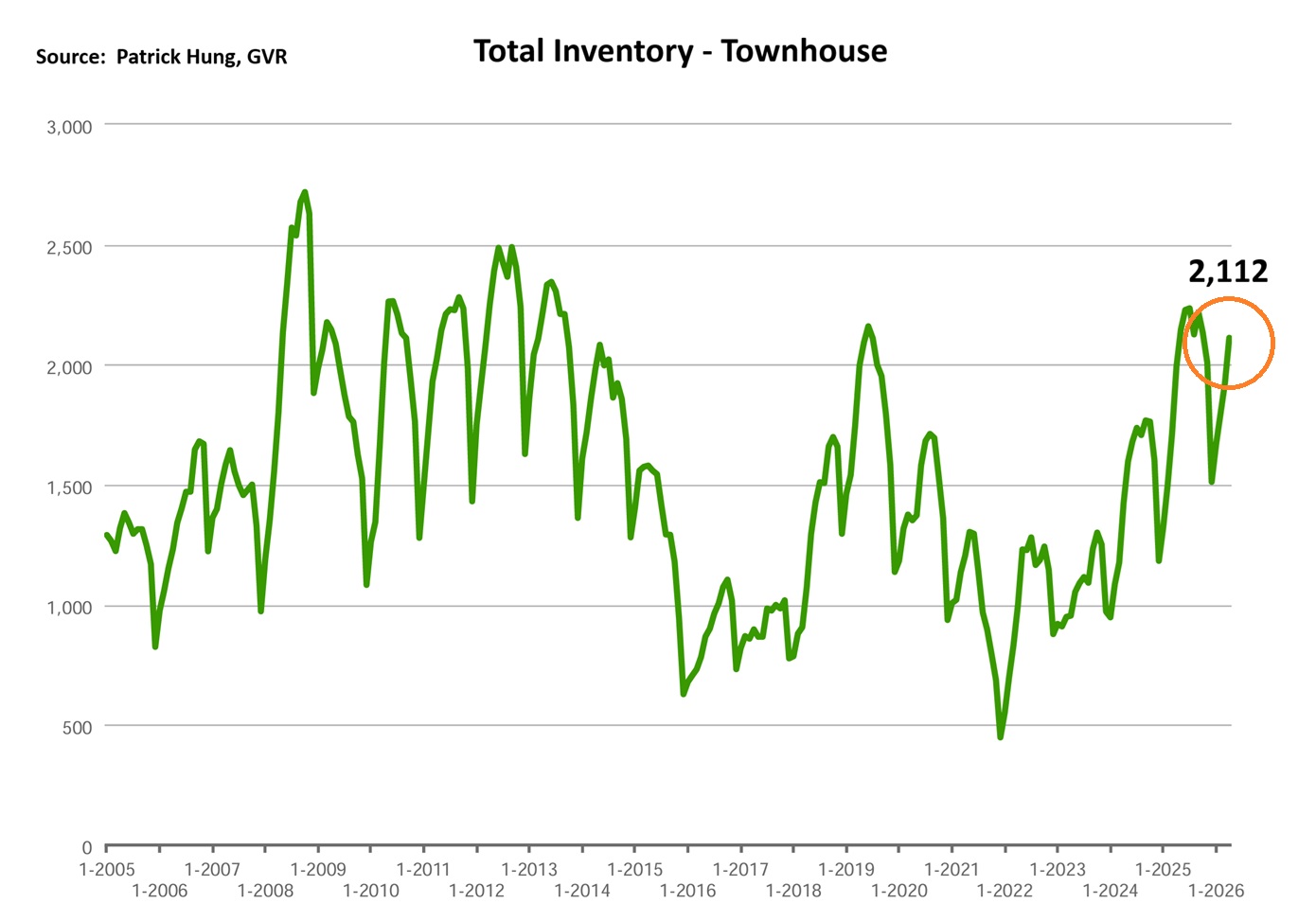
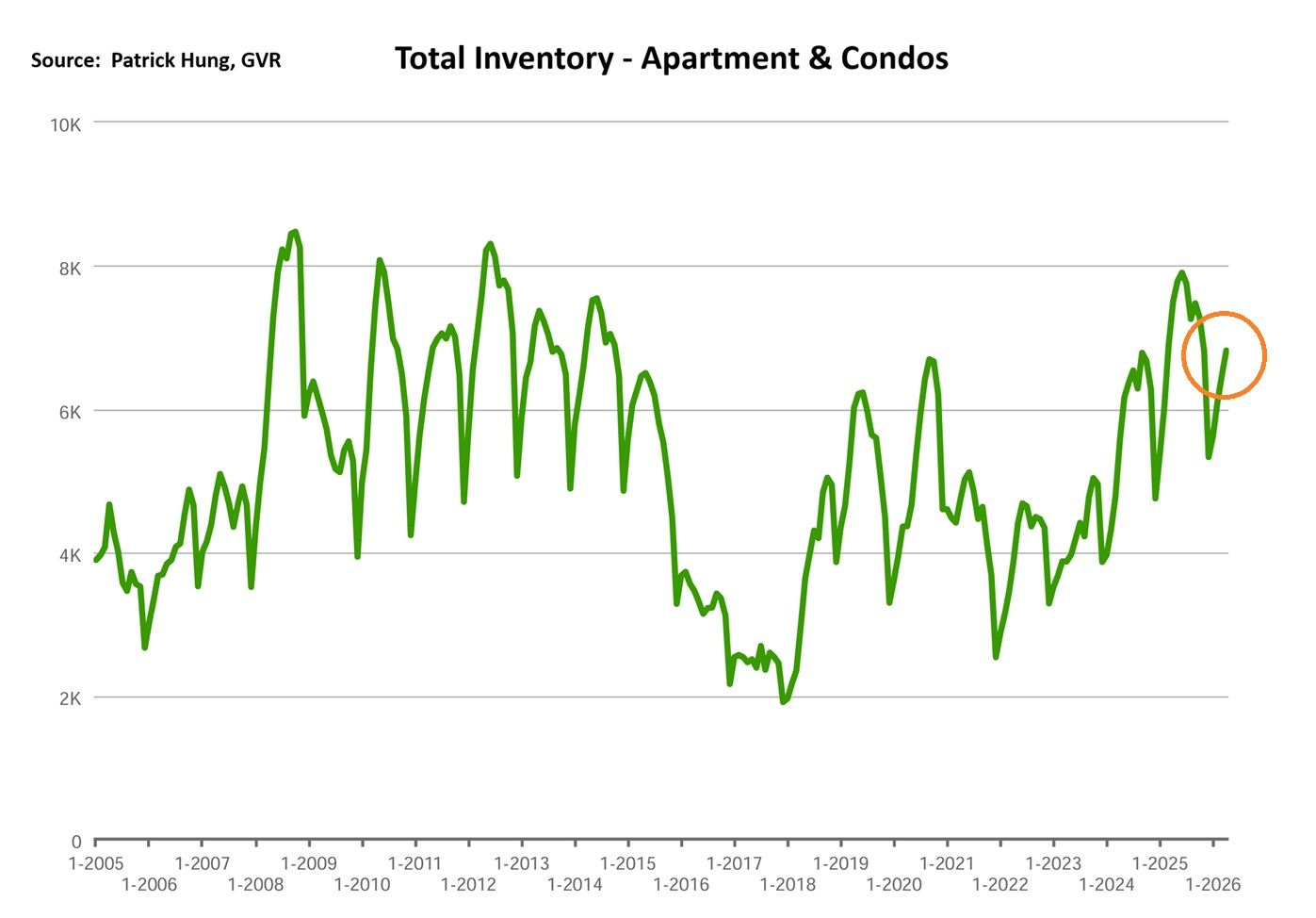
Despite the typical Spring rush, the condo market remains in a funk. In April, the monthly price dropped at -0.5%, which is mid-pack compared to single house (-0.8%) and townhouse (-0.4%). However, the condo supply shock remains the most concerning. Compound that with more nearly-complete projects finishing this year, and it's not hard to see why condo prices will trend downward this year. To put it into perspective, April's condo sales were the 3rd lowest for the month in the past 21 years, outside of 2019 and 2020 (pandemic). On a year-to-year basis, April of 2025 was a also a record low sale year, but in comparison to April 2026, this April's condo sales were even -10% less than last year. Statistically, the 1 year condo price dropped -7.9%, but anecdotally, the drop feels more like over -10%. When we account for all the new condo projects PLUS all the new immigrants in the past 21 years, AND the sales are now still trending at historic low, then one sense the magnitude of the condo supply shock we're in now. After all, the shopping frenzy for pre-sale condos that lasted over a decade in Vancouver that attracted both local retail mom-and-pops Buyers to overseas shoppers, has now flipped onto the other side. What that means is the price gap is spreading further between the pre-sale price (i.e $2500 per SF at Oakridge by Westbank) and the re-sale price ($1,320 per SF of an Oakridge condo 5 year old condo across the street). That's nearly $1,200 per SF of risk that no buyer will take. For this year and of all the segments, I'm the most bearish on condos. If I were a condo Seller now, I'd dress it up nicely and price it extremely sharp in the hopes of making a quick sale.
For the month of April, the best performing neighbourhoods for condos were in Vancouver West, Burnaby North and North Vancouver at +1.4% and +1.1% and +0.6% respectively. Conversely, the areas with the most significant price drops were all in the outskirts in Whistler, Sunshine Coast and Squamish, posting -14.7%, -14% and -13.5% respectively. The condo segment remained in a balanced market, with average days on market ending slightly higher to 40 days (compared to 38 days in March). Month-to-month sale price slipped by -0.5% (compared to -0.2% in March). Sale-to-listing (% homes sold) ratio dropped slightly as well to 14.7% (compared to 15.7% in March).
1. Rising Costs
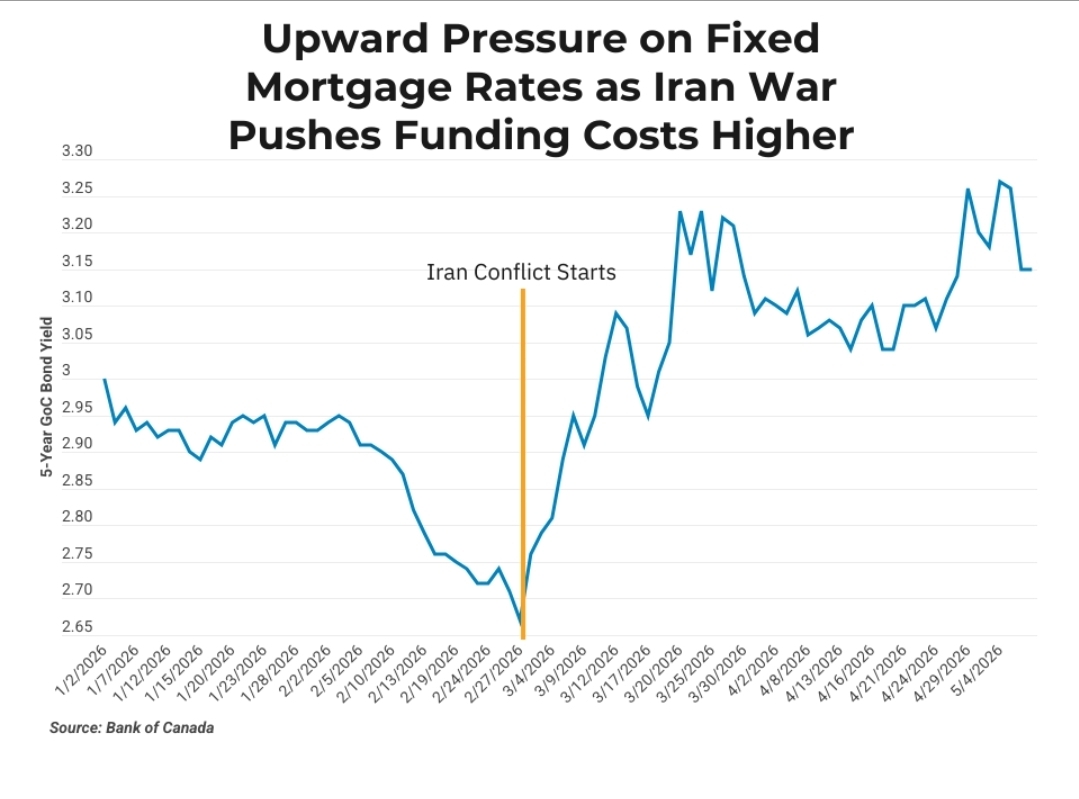
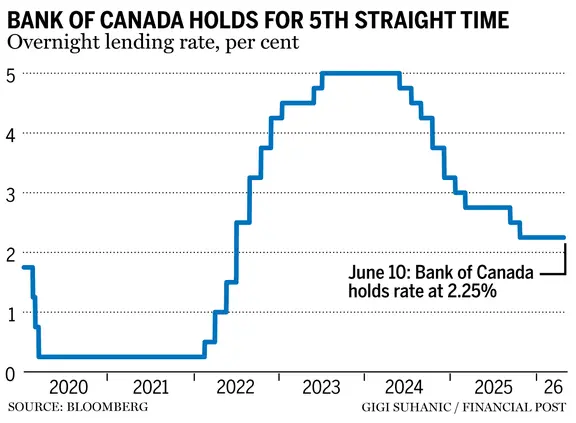
With the oil crisis, the Canadian bonds rates are ripping higher, and the mortgage rates are mirroring exactly that. Even with the Bank of Canada announcing no change to the overnight rates, major banks are adapting quickly: fixed rates are shooting up +0.4% since March. Canadians are getting hit with a double whammy with higher gasoline prices along with higher borrowings costs. Families budgets are stretching thinner and thinner, and maybe cutting back on vacation expenses is on the agenda. (Source: Bank of Canada)
2. Rental Supply Shock
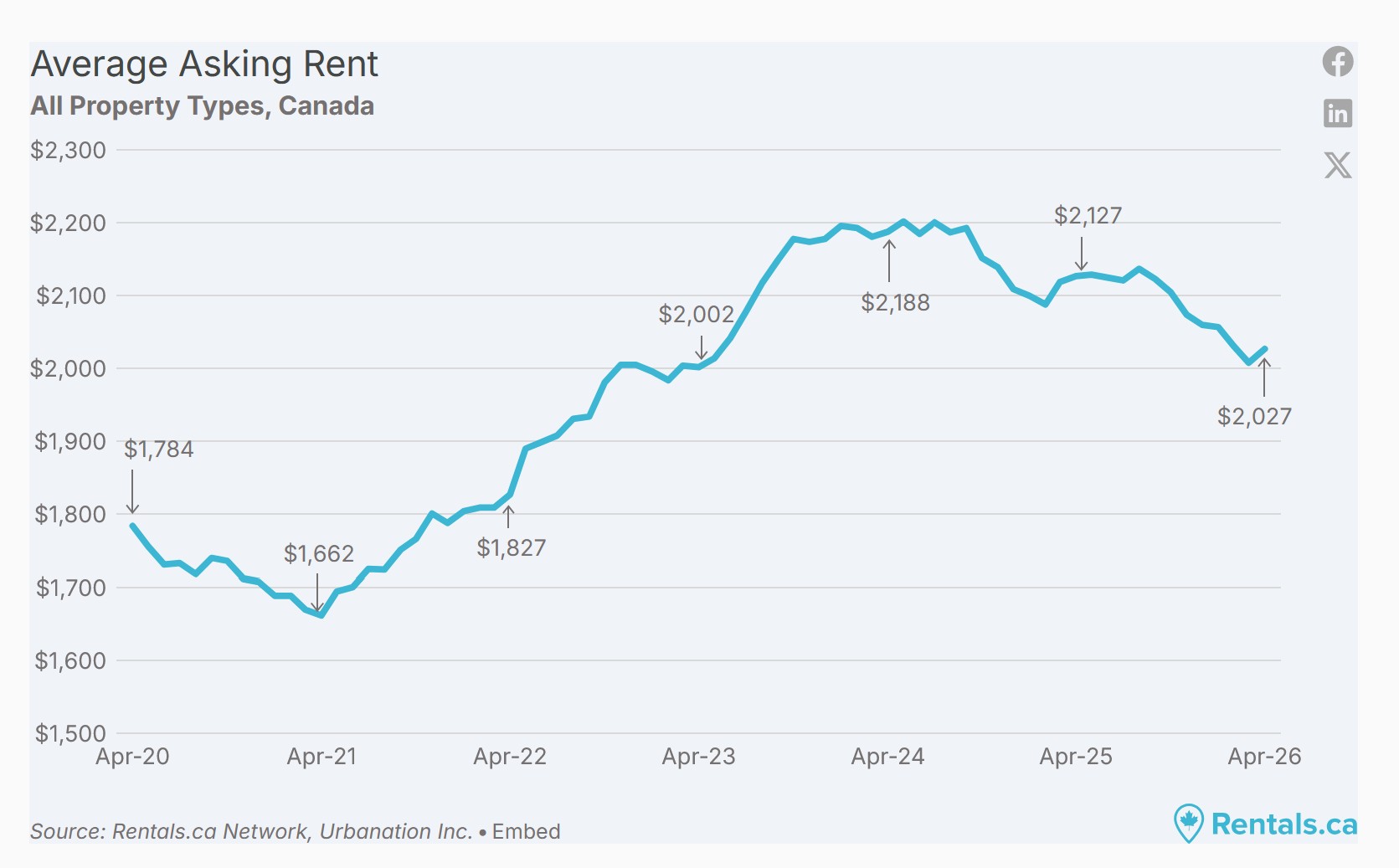
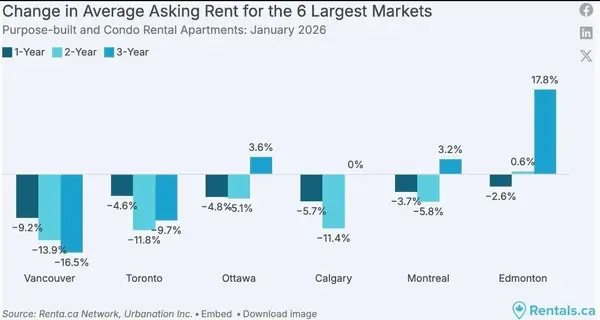
Canada's average rent prices have fallen for 19 consecutive months, dropping nearly 9% from its peak. Mark Carney's "Build Canada Strong" has been so successful in ramped up building rental house to a point of overkill, when there are net zero immigration coming in, PLUS more pre-sale projects that's about to complete in the most populous cities like Toronto and Vancouver. I guess it's right that the Liberals were voted to bring more housing to Canadians, though mainly it's rental than actual home ownership. (Source: Rentals.ca)
3. Crisis = Opportunity
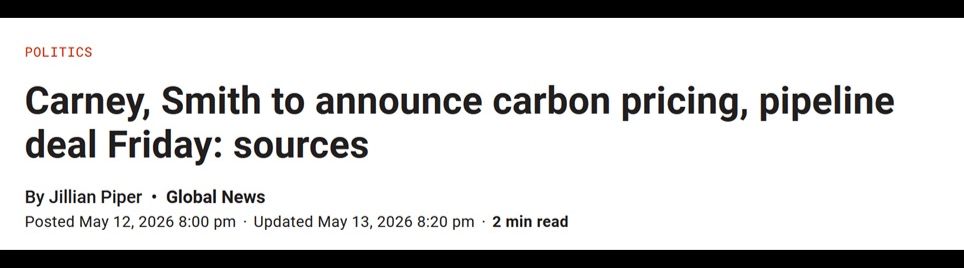
With a historic oil crisis comes an equally historic opportunity for the Canadian government to ramp up oil production. A year ago, an MOA (Memorandum of Agreement) was made between the Liberal government and Alberta to produce more oil. The past 3 months feels like a perfect storm that carved its way for a new pipeline. Now only BC's NDP government is standing in its way. Just imagine the massive economic benefits for Canada (especially BC and Alberta) if a new pipeline opens up for more oil production and transportation. As the world needs Canada's resources, Canada will also benefit from it too. (Source: Statistics Canada)
Recent Posts


GET MORE INFORMATION