

Real Estate Market Intelligence September 2026

Real Estate Market Intelligence
September 2026
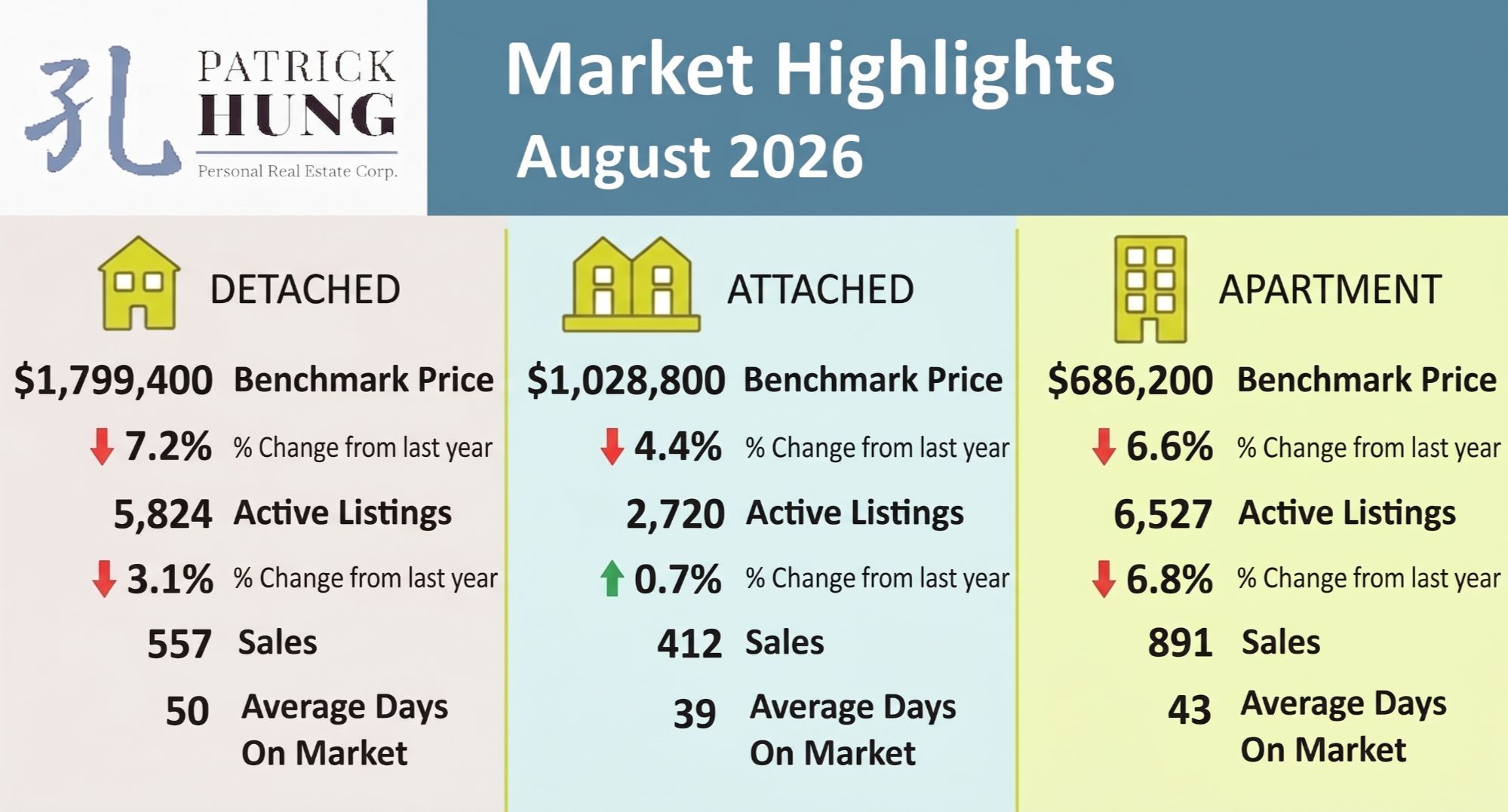
Fall is around the corner and the weather is starting to cool. As the volatile times persist, many are adjusting and getting accustomed to this new norm. By the same token, the real estate volatility continues, but follows a similar bigger trend. Last month's Vancouver real estate sales were the slowest in 14 years and was -20.7% below the 10 year average. There's no doubt it's bad, and it will be ironic to say that it's an improvement. Why? Because just a few months ago, sales were hitting 25 year lows. In other words, it went from worst to bad. Not good, but it's an improvement. Again, that is only one month's stats, but so far this year, we've seen the sales persistently hitting multi-decade lows, with an odd month of improvement. Anecdotally, I do see pent-up demand across the board. Buyers are still out there holding and holding while being increasingly selective about their purchases, which in turn create even more drag on the market. A lot to cover this month as we see a renewed US-CAN tariff (which can change anytime), a stubborn inflation due to higher gas prices, and the recent surging bond yield causing major banks to increase their fixed mortgage rate. Let's take a deeper dive.
Any thought a bottom in the near future has been squashed again last month, with the Vancouver real estate continues to be plagued by weak demand. It has been a wild summer of roller coaster ride in terms of sales, with June (+10%), followed by July (-18%), and now August (-20%). On a brighter note, the monthly home price drop has eased, from July's (-1%) to August (-0.6%). Still, considering the summer's 3 month price change at -1.7%, it is definitely a tough pill for the Seller to swallow, and also more reasoning for Buyers to continue the holding off on their purchasing plan. As for the supply side, we are starting to see inventory softening, even with total inventory at +26.2% above the 10 year average. Keep in mind that only a few months ago, the supply was at one point +40% above the 10 year average. So again, this simply went from worst to bad. The dog days of summer would typically see less supply. As September is starting to take shape, the next two months is when Sellers make their final push of the year before it gets quiet in late November to New Year.
To elaborate on the supply side, new listings for the first two weeks of September are ramping up, which is music to the ears of the Buyers whom will have a fresh batch of choices. Meanwhile, Sellers will have tougher decisions to make as they face stiffer competitions. If you're a Buyer or a Seller in the market now, ensure you position yourself accordingly to take full advantage in these two months. Market sentiment can shift quickly due to rising mortgage rates (discussed below), which means even MORE volatile times ahead.
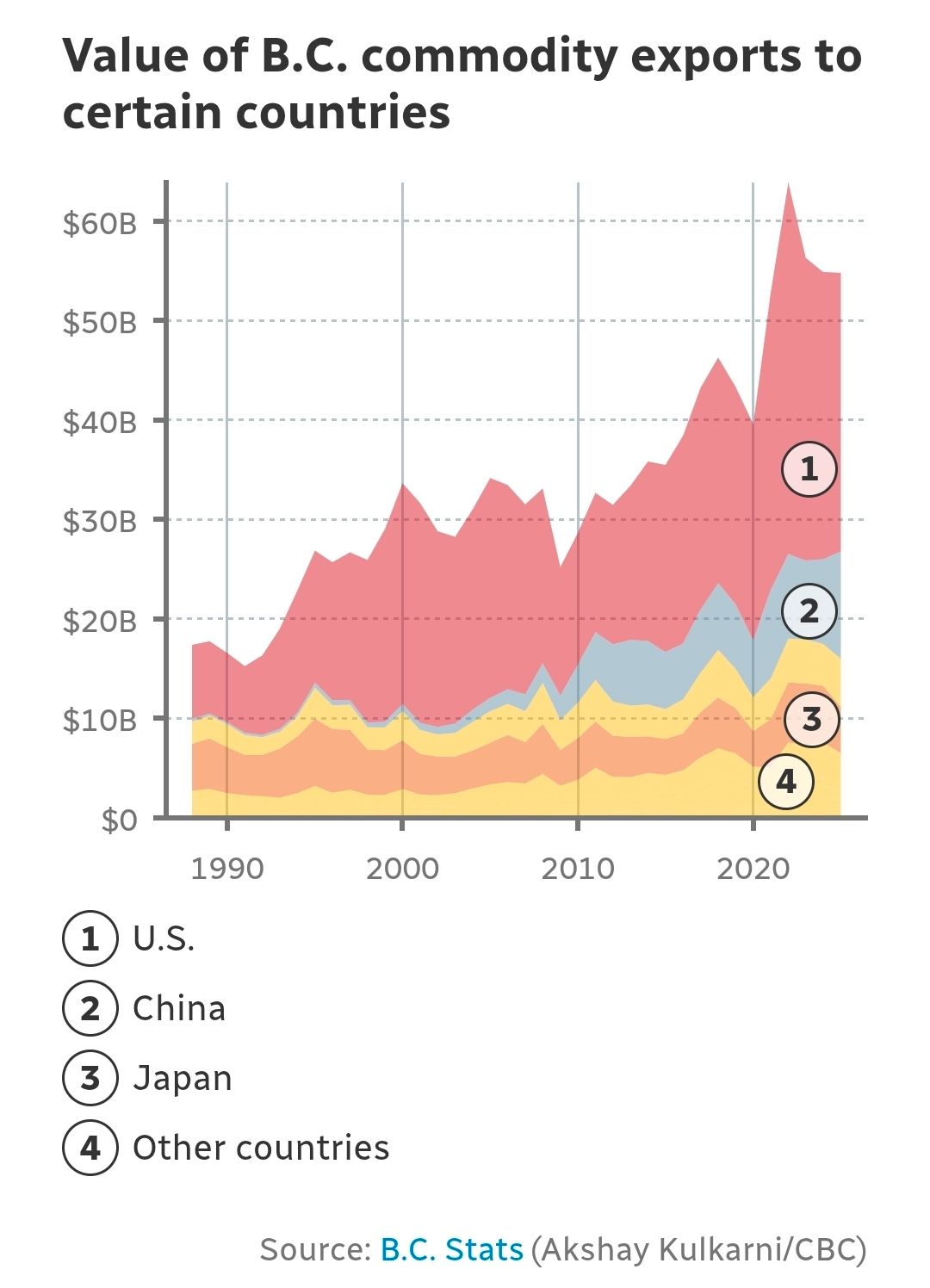
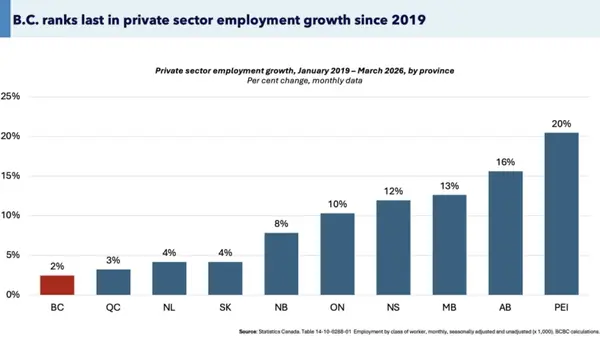
In the never-ending world of tariffs, the US-Canada riff has re-escalated. Most importantly is that BC will be one of the hardest hit provinces of all, with a reported 13.7% of all exports will be affected (compared to Quebec at 10.8% and Ontario at 9%). More news are surfacing that even more lumber factories are closing up in BC, and Sapporo, a Japan beer manufacture in Ontario, are also shifting their plants to the US. My concern is that once these factories are shut and their business leave, they're gone with no replacement in mind. This means some workers will be laid off for good. For this reason, Canada recent unemployment rate was flat at 6.4% for July and August, but has lost 42,000 jobs last month. The longer the tariff goes on, the more jobs will be lost, with some on a permanent basis. Mark Carney knows it too, and no matter how hard he goes to Europe or Asia to forge new international trade ties, there will be more short term pain ahead.
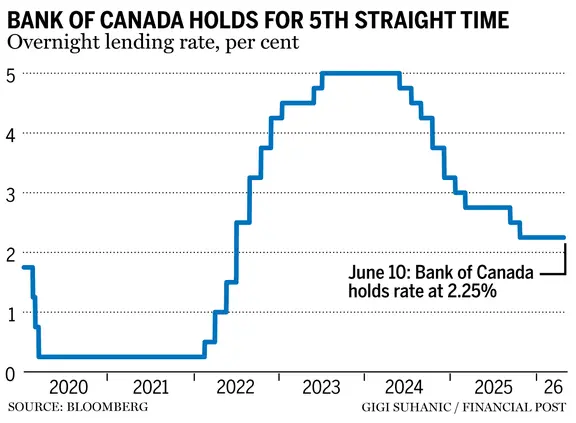
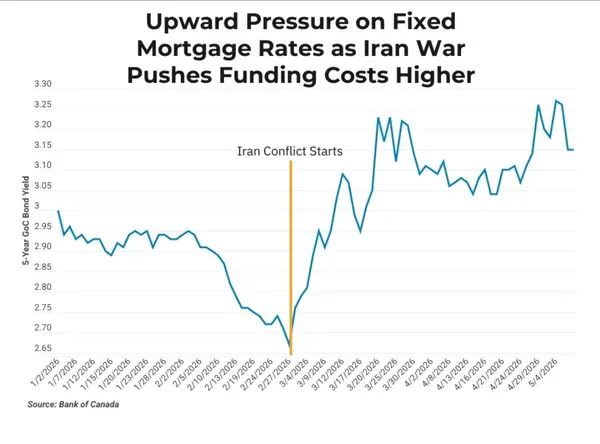
Speaking with re-escalation, the war in the Middle East ravages on, oil prices surged but August's inflation stood at 3% (unchanged from July). All the uncertainties in the world are causing the Canadian bond yields to rip higher. For example, the 5 year fixed bond yield has surged 0.6% in the past 3 months. Having seen this, the major banks are quietly jacking up their fixed mortgage, and all of them are now starting with a 4%, compared to only a few months ago at 3.5%. What kind of implication will this have on the real estate market is that it will make the Buyers, whom have a locked in mortgage rate, face a dilemma that had not been faced in a while; whether to risk buying at current (possibly higher) purchase price and with a lower rate, or possibly a future lower price and with a higher rate. Either way, this will either strengthen or dampen the current sales. As Canadian families are adjusting to this type of new norm of feverish changes, it would be wise to step back and re-visit the basics again. As real estate means a a home and shelter, they are a basic human need: there is just no way to perfectly time a purchase or a sale. Find a timing that best fits you and your family needs should always come first. Everything else follows after. The last stretch of the year is around the corner. Let's see.
Some of the unique trends I've been observing:
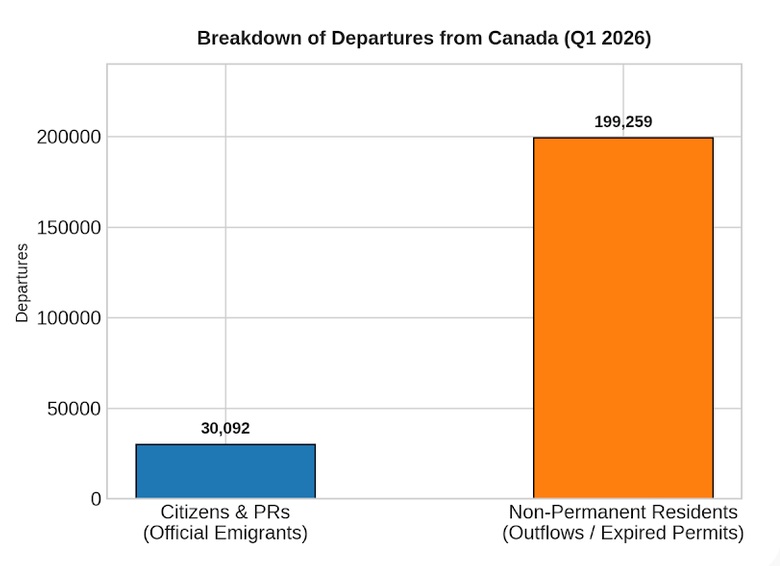
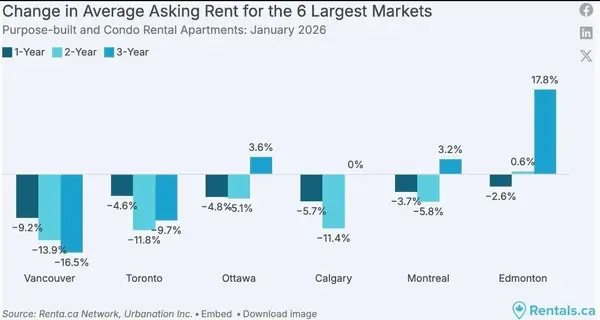
1. In Q1 2026, there were a total of 229,352 people left Canada for good (30,092 Canadian citizen and 199,260 non-residents and on work permits). Some Canadian cheer of the departure of these non-residents such as students and temporary workers, as there were much social problems caused (lack of jobs, crowded hospitals, etc) during that time. Strictly from an economic perspective, it is just that much harder to grow an economy with shrinking population. By the same token, we see Canadian rents have fallen for 23 consecutive months, and more and more landlords elect to sell their investment homes once the tenants leave. Shrinking population means less demand for real estate (purchase or rental), which means falling real estate prices and rents.
2. Canada's August unemployment rate stood still at 6.4% (same as July), which saw 42,000 jobs lost. What's more is that the re-escalated US-CAN tariff will likely spike this number further in the next few months, or even a year from now. Even if Mark Carney is going all over the world to forge new trade ties, the root problems would not be solved until many years from now. To the average Canadian worker who's been laid off and is surviving on his/her lifetime savings, time is not exactly on their side.
3. RBC has just released a report calling a "bottom" in Canadian real estate. Going back, RBC has called a bottom 8 times in the past 4 years. Meanwhile, RBC is also the Canada's largest mortgage creditor with 18.4% of the mortgage pie, so the biggest "supplier" is calling a bottom. You be the judge.
4. Another report from RBC states that more than half of the parents are now helping ADULT children financially, including groceries and rent. In the real estate realm, we know that over 80% of the Canadian buyers now have down payment help from Daddy and mommy bank. Now it has officially trickled even down to the groceries.
5. The Vancouver Real Estate market continue to be muted in August, with sales -20.7% below the 10 year average, while total inventory is +26.2% above the 10 year average. The spread between the two is 46.9%; it is still bad, but it has improvement from it's worst, which at one point in the beginning of the year saw 70% spread.
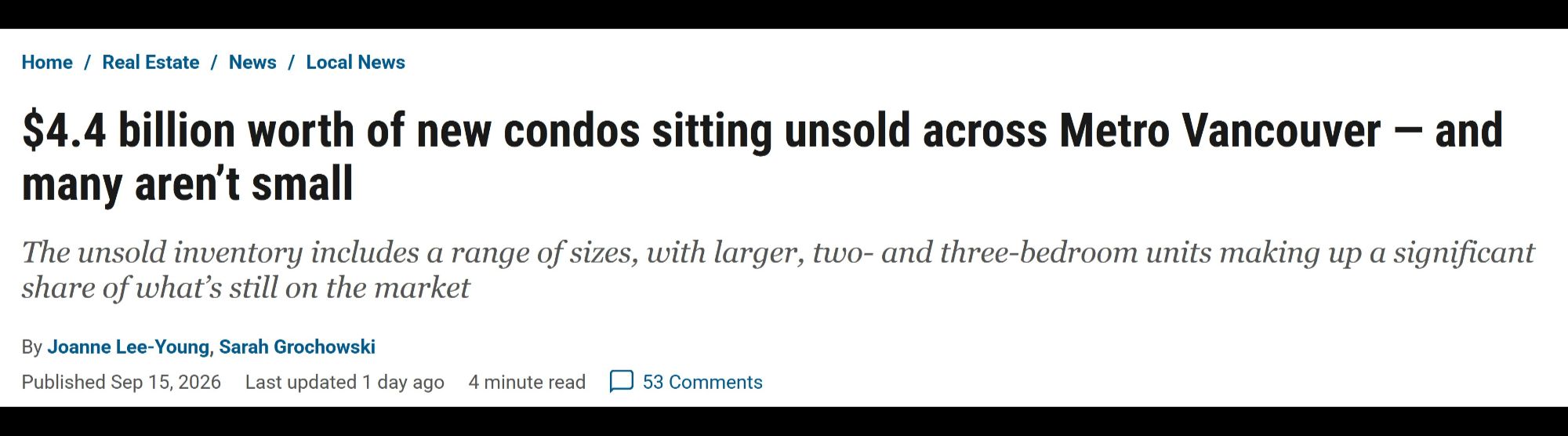
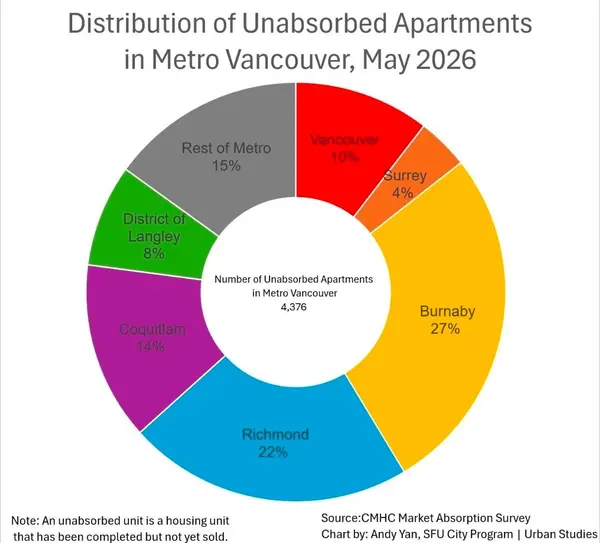
6. There are currently $4.4 billion worth of unsold NEW condos in BC, including 1,200 units in Burnaby, 958 in Vancouver, 816 in Richmond, 559 in Surrey, and 543 in Coquitlam. In order to clear the current back-log unsold inventory, it will take either a drastic price reduction by the developers, or an even more drastic upward shift in the real estate market. It certain doesn't look like the latter will happen. Let's see how long the the developers can hang on.
Here are the 3 highlights for August:
- Total inventory of 15,394 units is the 7th highest July's total inventory in the past 25 years. Inventory continue to softened from July to August, but is expect to see a bump in September. Buyers will rejoice at having more choices, while Sellers will have a tougher time facing stiffer competitions. Either way, the upcoming two months may see more sales after a slow summer.
- Price drops has picked up for the past 3 months, with average sales price dropping -1.7% from June to August. However, August price drop (-0.6%) had a slight improvement from July's. (-1%).
- Opportunities are still plentiful for Buyers, with prices continue to roll back to 2020-2021 levels. Single house remain the most attractive option for those who are looking to upsize. What is more astonishing is the most affluent neighbors in Vancouver West and West Vancouver, with single house average price between $2.8-2.9m, has seen their prices dropped -17.8% and -22.3% respectively since 2016. The ultra-rich neighborhoods are taking the hardest beating.
Here are the in-depth statistics of the August:
- Last month's sales were -20.7% below the 10 year August's sales average (compared to -18.6% in July). Demand was muted during the dog days of summer.
- Month by month residential home sales dropped -9.7% from July.
- Month by month new home listings fell sharply by a whooping -22.2%. Sellers were either cancelling their listings or holding off their plans to re-list in the Fall season.
- Last month's price drop by -0.6%. (compared to -1% in July)
- Sales-to-listing (or % of homes sold) ratio remained relatively flat as well at 12.3% (compared to 13% in July). By property type, the ratio is 9.6% for single houses, 15.1% for townhouses, and 13.7% for condos.
Download August 2026 Real Estate Market Report
Single House Market
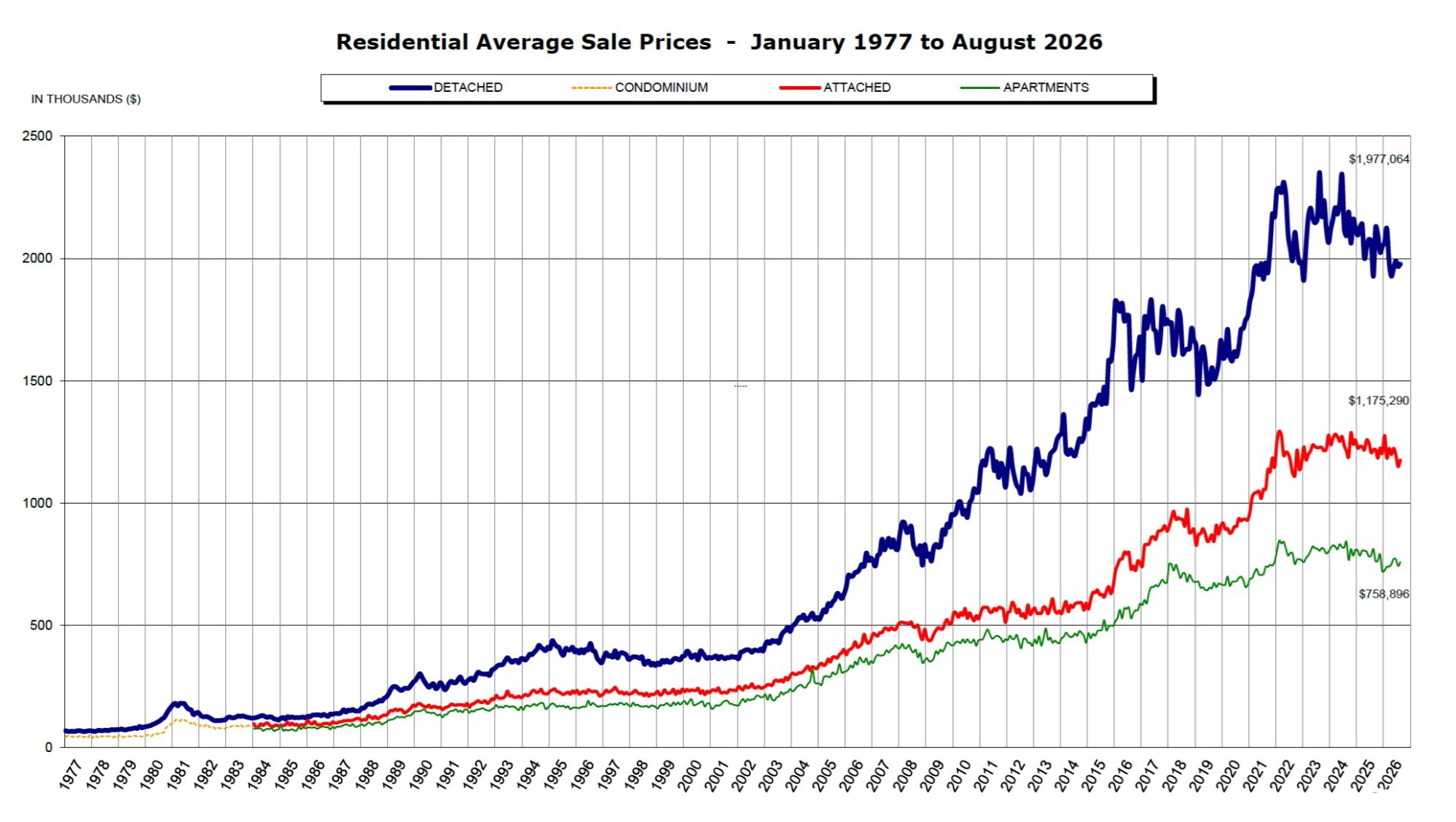
On the surface, the single house market dragged the entire market down in August, with this segment's registered a sharp monthly price drop of -1.3% (compared to the overall market change at -0.6% last month). Diving deeper, the pent up demand for single house remain the highest. Just drive by any ordinary neighbor in the Metro Vancouver area (i.e Burnaby, East Vancouver, Richmond, Ladner, New Westminster), and you would be hard pressed to see newly constructed single houses. However, you will certainly see high rises under construction. What the Canadian family yearns is for a single house, and of course it's expensive. However, as the single house prices keep dropping, a single house dream that was once unaffordable may be within reach. As such, the single house supply remain plentiful now, but could become very limited quickly due to its ability to hold value over the long term. As such, entry level single houses ranged between $1.3m-$1.7m in Metro Vancouver are still attracting Buyers, but demand weakness remain persistent this summer. Many neighborhoods, such as West Vancouver, Surrey and Richmond, were registering lowest sales ratios deep into the Buyer's market at 6%, 7% and 8% respectively. The outlier of the market was Pitt Meadows, at a surprising 23% sales ratio and remains the sole winner in the Seller's market for single house. In my opinion, the single house remain desirable. However, there's no bottom or even recovery in sight.
For the month or August, the neighborhoods that registered the price growth were Richmond and North Vancouver, posting a measly +0.7% and +0.5% +0.1% respectively. Conversely, the neighborhoods registered the most significant price drops were in the outskirts of Port Coquitlam, Sunshine Coast, and Whistler with -4.9%, -4.2% and -2.7% respectively.
The single house market has remained in the Buyers market for a second consecutive month, with average days on market increasing significantly to 50 days (compared to 42 days in Julu), and month-to-month sales price dropped further to -1.3% (compared to -1% in July). Sales-to-listing ratio (% of homes sold) also slipped to 9.6% (compared to 10.5% in July).
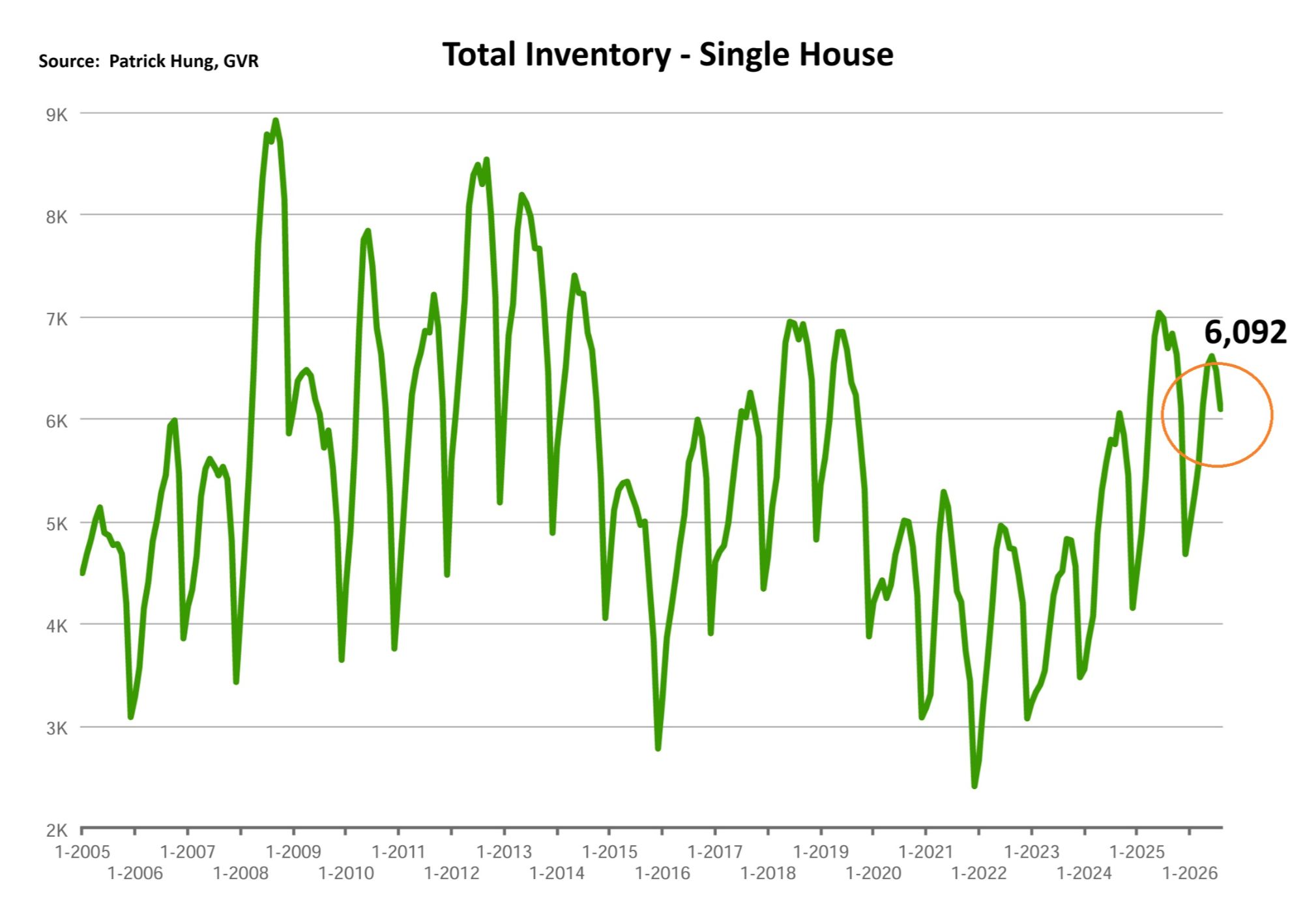
For the townhouse prices, the monthly price drop seem to have stabilized in August (-0.1%) compared to July's drastic fall (-1.5%). As with the dog days of summer, options were limited due to the seasonality, as the month-over-month supply for townhouses dropped by -10.4%. What was ironic was that the competitively priced homes are still drawing traffic, but offers remain far and few between. Buyers who didn't go on summer vacation and are still looking, are the serious Buyers, but most of them remained on the fence in August, much to the dismay of the Sellers. Noteworthy is that townhouse Buyers continue to shift to newly constructed multi-plex products. In Metro Vancouver (i.e East/West Vancouver, Richmond, Burnaby), most townhouses are built on arterial roads, where traffic noise become a nuisance. However, multi-plex can be a quiet inside block, which is a huge bonus for Buyers. The most practical point is the price. For example, in East Vancouver the NEW multi-plex prices are sold around $1,000/sf, but NEW townhouses could be upwards of $1,200/sf. The 20% difference is enough to drive townhouse Buyers into the arms of the multi-plex. As such, I believe the townhouse market will face stiffer competition ahead and will have further downward price pressure.
In August, the areas with the most townhouse price growths were Whistler, Sunshine Coast and Vancouver West, registering +1.9%, +1.2%, and +1.1% respectively. On the other hand, the neighborhoods with the most significant price drops were Vancouver East, Maple Ridge and Pitt Meadows, at -2.3%, -1.9% and -1.5% respectively.
The townhouse market remained in a balanced market, with days on market climbing to 39 days (compared to 33 days in July). Month-to-month sale price dropped eased to -0.1% (compared to -1.5% in July). Sales-to-listing ratio (% of homes sold) dropped slightly to 15.1% (compared to 15.8% in July).
Condo Market
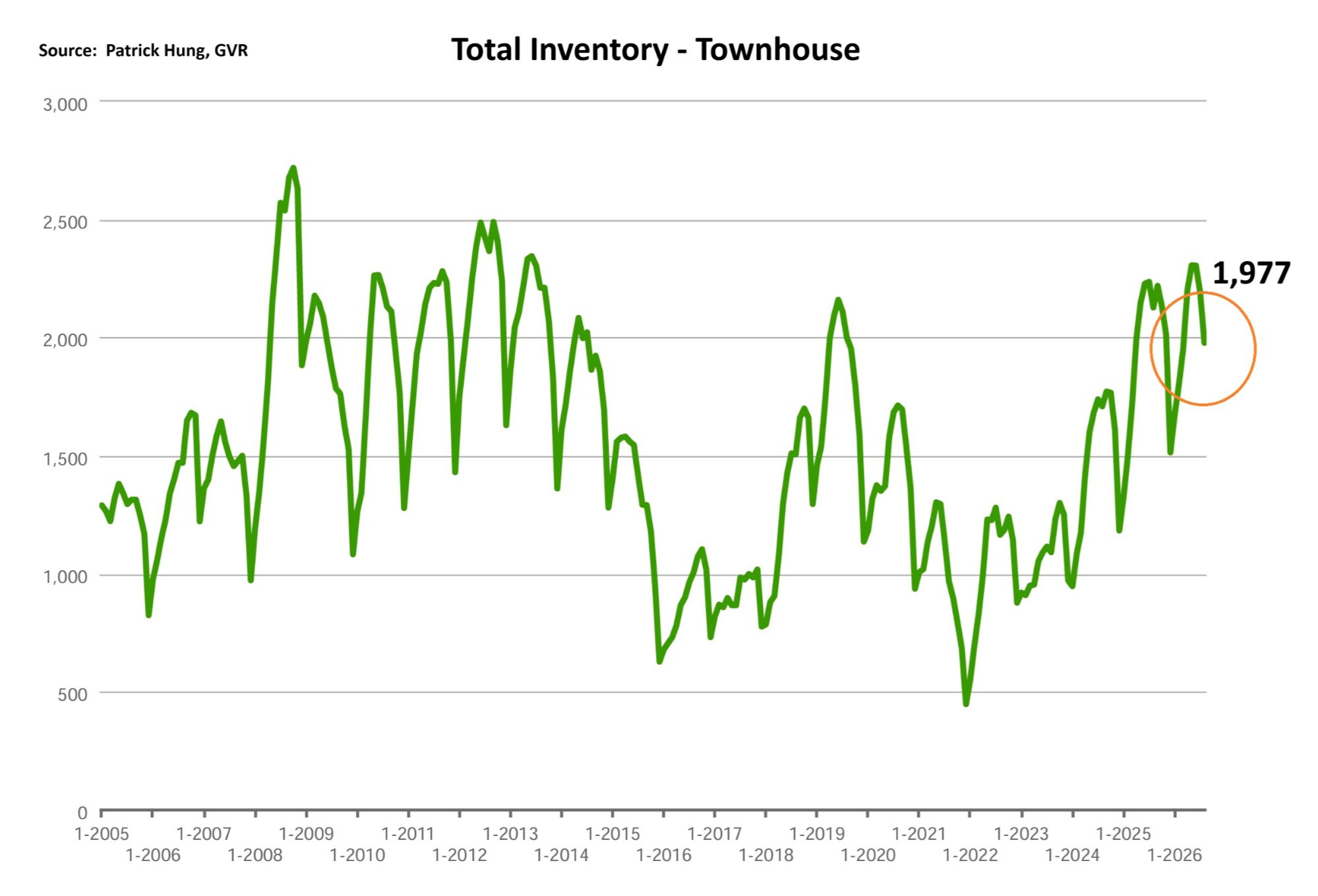
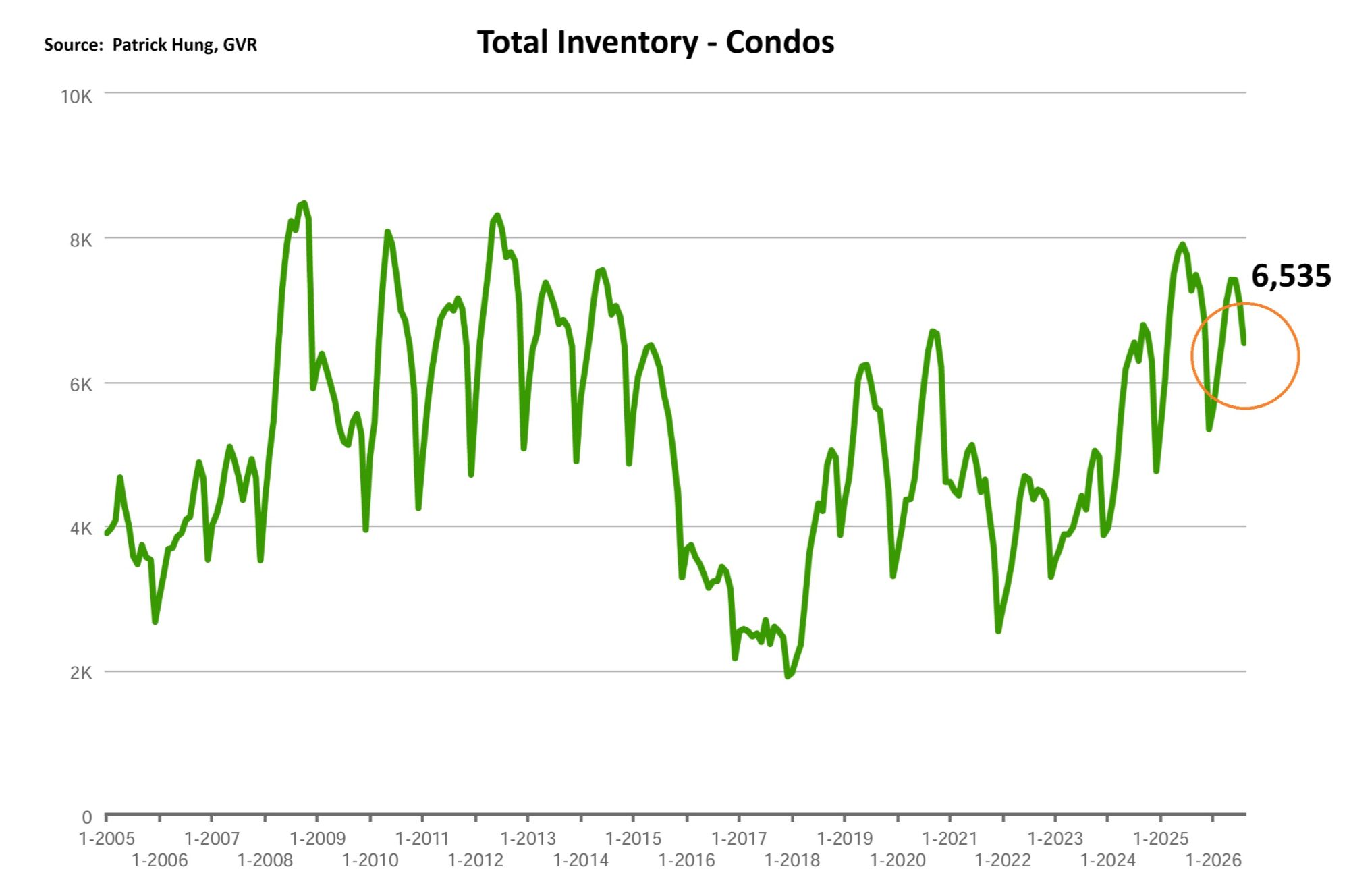
Condo market continued it's higher absorption rate in August, with only -7% in monthly sales drop (compared to single house at -14.2% and townhouse at -17.3%). By far, it is the best performing segment in the past two months. As much, it is starting to draw down the existing inventory. What is interesting is the potential rate hike ramifications it will have on the condo market. As we know, condo are attractive to mainly younger generations and first time home buyers, whom of which are a group that's more sensitive to rates spikes. What's ironic is that on one hand, we have second-hand condos inventory softening further. On the other hand, a news report came out that NEW UNSOLD condos now accumulate to 4,076 units, with a total net worth of $4.4 billion in BC. Of which, Burnaby takes the cake with 1,200 unsold units, followed by Vancouver at 958 units and Richmond at 816 units. Condo market is polarizing. An example of which the new condos in core Downtown Vancouver are ASKING over $1,600/sf, the re-sale condos are much more friendlier at $1,000/sf for a 15 year old building. An staggering difference of $600/sf is a tough pill to swallow for Buyers, especially in a time of economic downturn. For this reason, most BC developers are having a hard time staying afloat with record high of unsold inventory. Million dollar question: if the condo inventory continue to get drawn down, does that mean a bottoming of price is in sight?
For the month of August, the best performing neighbourhoods for condos were all in the outskirts of Squamish, Sunshine Coast and Whistler, at +4.7% (tied for 1st & 2nd place) and +4.1% each. Conversely, the areas with the most significant price drops were in Port Coquitlam, North Vancouver and Ladner, posting -2.2%, -2% and -1.8% respectively.
The condo segment remained in a balanced market, with average days on market remained flat at 43 days (compared to 42 days in July). Month-to-month sale price drop eased to by -0.2% (compared to -1.1% in July). Sale-to-listing (% homes sold) ratio remained had little change at 13.7% (compared to 14% in July).
Here are the Three Trends I'm Observing:
1. Goodbye
In Q1 2026, there were a total of 229,352 people left Canada for good, and nearly 200,000 of them are non-resident, students, and on temporary work permit. Some Canadian cheer of the departure of these non-residents that had created social problems such as lack of jobs for younger Canadians and crowded hospitals during that time. If looking at it strictly from an economic perspective, it is just that much harder to grow an economy with shrinking population. Where does the Canadian immigration policy go from here? (Source: Statistic Canada)
2. Tariff Pain
Mark Carney didn't mince on words when he said "there will be tougher times" after having US-CAN tariff negotiations broke down. Of all the Canadian provinces, BC will get hurt the most, with 13.7% or roughly $3.8 billion worth of the exports going the the US will be affected. Of course, tariffs can come and go, but with jobs lost and factories shut, workers who are affected will not be immediately healed. The longer the tariff plays out, the more BC's unemployment will rise. (Source: BC Stats, CBC)
3. Unsold
Since 2022, we've been reporting the Greater Vancouver pre-sale condo scene were shifting from bad to worse. Recent news reported that over 4,000 new unsold condos worth $4.4 billion remains. Burnaby tops the list with 1,200 units, followed up Vancouver (958), and Richmond (816), Surrey (559), and Coquitlam (543). Ever wondered why there are more and more developers going bankrupt in BC? The glorious days of flipping pre-sale for profits are long gone, and now most BC developers can barely hang on. (Source: Vancouver Sun)
Recent Posts


GET MORE INFORMATION